Pages

Tuesday, 25 November 2008

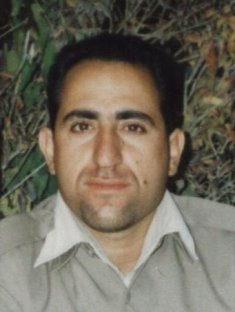
The Observatory: Revolutionary Court of Tehran sentenced Mr. Youssef Azizi Bani-Torof, a leading Ahwazi Arab author five years of imprisonment


THE OBSERVATORY
for the Protection of Human Rights Defenders

L’OBSERVATOIRE
pour la Protection des Défenseurs des Droits de l’Homme
EL OBSERVATORIO
para la Protección
de los Defensores de Derechos Humanos

URGENT APPEAL - THE OBSERVATORY

IRN 014 / 1108 / OBS 192
Sentencing / Harassment
Iran
November 17, 2008


The Observatory for the Protection of Human Rights Defenders, a joint programme of the International Federation for Human Rights (FIDH) and the World Organisation Against Torture (OMCT), requests your urgent intervention in the Islamic Republic of Iran:

Brief description of the situation:

The Observatory has been informed by reliable sources about the sentencing of Mr. Youssef Azizi Bani-Torof, a leading Ahwazi Arab author who writes both in Persian and Arabic, member of the Writers’ Association Kanoun-e Nevisandigan, and journalist for the Iranian daily newspaper Hamshahri, to five years of imprisonment.

According to the information received, on November 12, 2008, the Revolutionary Court of Tehran sentenced in appeal Mr. Youssef Azizi Bani-Torof to five years of imprisonment for having criticised the repression of the Arab speaking population in Ahvaz city, Khuzestan, in April 2005. As of issuing this urgent appeal, Mr. Youssef Azizi Bani-Torof remained free pending his appeal before the Supreme Court.

Mr. Youssef Azizi Bani-Torof had been arrested on April 25, 2005 after his participation to a peace conference in which he condemned the excessive use of force against participants to demonstrations that took place on April 15, 2005, in Ahvaz, to denounce the increase in discrimination and suppression of cultural rights faced by the Arab population in Khuzestan.

After being detained during 50 days in the Evin prison, he was released on a one billion Rial bail. On August 10, 2008, more than three years later, he was sentenced to five years in prison and then lodged an appeal against the decision.

The Observatory expresses its deep concern about Mr. Youssef Azizi Bani-Torof’s harsh sentencing as it seems to merely sanction his activities of promotion of human rights principles and strongly condemns the increasing repression of the Iranian authorities against human rights defenders.

The Observatory further wishes to remind that Iran made a commitment to “uphold the highest standards in the promotion and protection of human rights”
[1] by presenting its candidacy to the Human Rights Council 2006 election, and had insisted in this regard that the country has “continuously put great efforts into safeguarding the status and inherent dignity of the human person as well as the promotion and protection of human rights and fundamental freedoms”[2]; however the conviction of Mr. Bani-Torof for simply defending human rights, as well as the processes leading to the conviction, such as his two month detentions, contradict such a commitment and undo such efforts.

Actions requested:

Please write to the authorities in Iran urging them to:

i. Guarantee in all circumstances the physical and psychological integrity of Mr. Youssef Azizi Bani-Torof;

ii. Respect in all circumstances his right to a fair trial according to international human rights standards;

iii. Put an end to all acts of harassment - including at the judicial level - against Mr. Youssef Azizi Bani-Torof as well as against all Iranian human rights defenders;

iv. Conform with the provisions of the UN Declaration on Human Rights Defenders, adopted by the General Assembly of the United Nations on December 9, 1998, especially its Article 1, which states that “everyone has the right, individually and in association with others, to promote and to strive for the protection and realisation of human rights and fundamental freedoms at the national and international levels”, Article 6 (b) which stipulates that “everyone has the right […] freely to publish, impart or disseminate to others views, information and knowledge on all human rights and fundamental freedoms”, as well as Article 12(2), which provides that “the State shall take all necessary measures to ensure the protection by the competent authorities of everyone, individually and in association with others, against any violence, threats, retaliation, de facto or de jure adverse discrimination, pressure or any other arbitrary action as a consequence of his or her legitimate exercise of the rights referred to in the present Declaration”;

v. Ensure in all circumstances the respect for human rights and fundamental freedoms in accordance with the Universal Declaration of Human Rights and with international and regional human rights instruments ratified by the Islamic Republic of Iran.

Addresses:

· Leader of the Islamic Republic, His Excellency Ayatollah Sayed Ali Khamenei, The Office of the Supreme Leader, Shoahada Street, Qom, Islamic Republic of Iran, Faxes: + 98.21.649.5880 / 21.774.2228, Email: info@leader.ir / istiftaa@wilayah.org / webmaster@wilayah.org;
· President, His Excellency Mahmoud Ahmadinejad, the Presidency, Palestine Avenue, Azerbaijan Intersection, Tehran, Islamic Republic of Iran, Fax: + 98.21.649.5880, E-mail: dr-ahmadinejad@president.ir;
· Head of the Judiciary, His Excellency Mr. Mahmoud Hashemi Shahrudi, Ministry of Justice, Park-e Shahr, Tehran, Islamic Republic of Iran, Fax: +98.21.879.6671 / +98 21 3 311 6567, Email: Irjpr@iranjudiciary.com;
· Minister of Foreign Affairs, His Excellency Mr. Manuchehr Motaki, Ministry of Foreign Affairs, Sheikh Abdolmajid Keshk-e Mesri Av, Tehran, Islamic Republic of Iran, Fax: + 98.21.390.1999, Email: matbuat@mfa.gov;
· Permanent Mission of the Islamic Republic of Iran, Chemin du Petit-Saconnex 28, 1209 Geneva, Switzerland, Fax: +41 22 7330203, Email: mission.iran@ties.itu.int;
· Ambassador Mr. Ahani, Embassy of Iran in Brussels, avenue Franklin Roosevelt, 15 A. 1050 Bruxelles, Belgium, Fax: + 32 2 762 39 15. Email:
iran-embassy@yahoo.com.

Please also write to the diplomatic mission or embassy of Iran in your respective country.

***
Geneva-Paris, November 17, 2008

Kindly inform us of any action undertaken quoting the code of this appeal in your reply.

The Observatory, a FIDH and OMCT venture, is dedicated to the protection of Human Rights Defenders and aims to offer them concrete support in their time of need. The Observatory was the winner of the 1998 Human Rights Prize of the French Republic.

To contact the Observatory, call the emergency line:
E-mail: Appeals@fidh-omct.org
Tel and fax FIDH + 33 (0) 1 43 55 20 11 / +33 1 43 55 18 80
Tel and fax OMCT + 41 (0) 22 809 49 39 / + 41 22 809 49 29

FIDH
International Federation for Human Rights
17, Passage de la Main d’Or
75 011 Paris, France
OMCT
World Organisation Against Torture
Case postale 21 - 8 rue du Vieux-Billard
1211 Geneva 8, Switzerland


[1] In accordance with GA resolution A/RES/60/251 establishing the Human Rights Council.
[2] http://www.un.org/ga/60/elect/hrc/iran.pdf

Sunday, 23 November 2008

Reuters: Iran fails to halt U.N. assembly rights resolution


Fri Nov 21, 2008 11:35pm EST
UNITED NATIONS (Reuters) - Western nations claimed a success on Friday when a U.N. General Assembly resolution condemning human rights violations in Iran passed through a key committee more easily than in the past.

Iran's bid to halt action on the resolution in the assembly's third committee -- meaning it would have been shelved -- was defeated by 81 votes to 71. A similar move on a similar resolution last year was stopped by just one vote.
The committee then passed the resolution by 70 votes to 51, although 60 countries abstained. The resolution goes to the full assembly next month, but diplomats said the outcome was expected to be the same and the key vote was in the committee.
The nonbinding resolution, sponsored mainly by Western countries and put forward by Canada, expresses "deep concern at serious human rights violations" in Iran.
It urges Iran to end alleged torture and cruel punishment of detainees, executions of juveniles, stonings to death, violent repression of women demonstrators, discrimination against ethnic minorities and members of the Baha'i faith, and restrictions on freedom of religion and belief.
"The importance of this resolution is to put the spotlight on Iran's very poor human rights record," British Ambassador John Sawers told reporters.
"This is a political motivated resolution, lacks the minimum legitimacy and is an obtrusive example of selectivity and double standard," Mohammad Mir Ali Mohammadi of the Iranian U.N. Mission said in a statement.
"It contains a number of falsified and unsubstantiated elements that contradict the realities of human rights situation in Iran."
Bani Dugal, a New York-based Baha'i spokeswoman, said the assembly action had "cleared the way for a thorough investigation of human rights abuses in Iran."
She said the entire seven-member Baha'i national leadership in Iran was being held in jail in Tehran.
(Reporting by Patrick Worsnip; Editing by Xavier Briand)

Friday, 21 November 2008

amnesty: Ebrahim Mehrnehad, a member of the Baluchi minority in Iran, has been sentenced to five years’ imprisonment


PUBLIC AI Index: MDE 13/168/2008

18 November 2008

Further Information on UA 68/08 (MDE 13/047/2008, 12 March 2008) Fear of torture New concerns: Possible prisoner of conscience/ unfair trial

IRAN Ebrahim Mehrnahad (or Mehrnehad) (m), aged 16
Fazlorahman Jahras (m), aged about 16
Abdollah Salarzahi, (m), leading member, Voice of Justice Young People’s Society (VJYPS)
Asadollah Shahbaksh, (m) student, VJYPS member
Ebrahim Mehrnehad, a member of the Baluchi minority in Iran, has been sentenced to five years’ imprisonment, two of them suspended. Fazlorahman Jahras, Abdollah Salarzahi and Asadollah Shahbaksh, members of the Baluchi minority, have been released.

Ebrahim Mehrnehad was arrested in March 2008, and held in Zahedan Central Prison in Sistan and Baluchistan Province, south-eastern Iran. On or around 16 September, a court in Zahedan sentenced him on charges of ‘acting against national security’ and ‘spreading propaganda’. These charges may relate to his public condemnation of the death sentence imposed on his brother, Ya'qoub Mehrnehad, who was subsequently executed in August. Ebrahim Mehrnehad was not given access to a lawyer and according to reports, he has been tortured, including by being burnt. He may be a prisoner of conscience, detained solely on account of the peaceful exercise of his rights to freedom of expression and association.

Baluchi journalist and civil society activist Ya'qoub Mehrnehad was executed on 4 August 2008 (see UA 38/08, MDE 13/038/2008, 12 February 2008 and follow-ups). Ya'qoub Mehrnehad was the head and co-founder of Voice of Justice Young People’s Society (VJYPS), which organizes events such as concerts and educational courses for young Baluchi people, and raises funds to help the poor. Ebrahim Mehrnehad was previously arrested after a meeting of VJYPS, in May 2007, and released after three months.

Fazlorahman Jahras was released in August. Abdollah Salarzahi, spokesperson and Central Council member of the VJYPS, and Asadollah Shahbaksh, a member of the VJYPS and geography student at Azad University in Zahedan, were both released at the end of August. Amnesty International has no further information relating to their cases.

BACKGROUND INFORMATION


Iran’s Baluchi minority is believed to constitute one to three per cent of the country’s total population of around 70 million. Most ethnic Baluchis live in Sistan-Baluchistan province, with smaller numbers in Kerman province. However, Baluchis have migrated elsewhere in Iran, particularly Tehran, to find work. Baluchis in Iran mostly speak Baluchi as a first language, with a minority speaking Brahoui. Most are Sunni Muslims, although the majority (around 90 per cent) of Iranians are Shi’a. An estimated 20,000 of the 1.7 million inhabitants of Sistan-Baluchistan province are said to be nomads. There has been an increase in human rights violations on the Baluchi minority by the Iranian government following a number of attacks on Iranian officials by the Baluchi armed group, the People's Resistance of Movement of Iran (PRMI), formerly known as Jondallah. This has included widespread arrests and concurrent marked rise in the number of executions of ethnic Baluchis, often after grossly unfair, summary trials.

For further information please see: Iran: Human Rights Abuses against the Baluchi Minority, MDE 13/104/2007, September 2007; at
http://www.amnesty.org/en/library/info/MDE13/104/2007.

RECOMMENDED ACTION: Please send appeals to arrive as quickly as possible, in Persian, French, English or your own language:
- welcoming the release of Fazlorahman Jahras, Abdollah Salarzahi and Asadollah Shahbaksh;
- urging the authorities to release Ebrahim Mehrnehad if he is being detained solely for the peaceful exercise of his rights to freedom of expression and association;
- asking to be informed in detail of the charges brought against him;
- calling on the authorities to ensure that any appeal procedure conforms to international standards for fair trial;
- urging the authorities to ensure that Ebrahim Mehrnehad has access to his family and a lawyer of his choice and to any medical treatment he may require;
- urging the authorities to ensure that he will not be tortured or otherwise ill-treated while in detention;
- reminding the authorities that the use of confessions extracted under duress is prohibited by Article 38 of the Constitution of Iran.

APPEALS TO:
Head of the Judiciary
His Excellency Ayatollah Mahmoud Hashemi Shahroudi
Howzeh Riyasat-e Qoveh Qazaiyeh / Office of the Head of the Judiciary
Pasteur St., Vali Asr Ave., south of Serah-e Jomhouri, Tehran 1316814737, Islamic Republic of Iran
Email: info@dadgostary-tehran.ir (In the subject line write: FAO Ayatollah Shahroudi)
Salutation: Your Excellency

Minister of Intelligence
Gholam Hossein Mohseni Ejeie
Ministry of Intelligence, Second Negarestan Street, Pasdaran Avenue,
Tehran, Islamic Republic of Iran
Salutation: Your Excellency

Governor of Sistan - Baluchistan province
Mr Dahmarde, Governor
Fax: +98 541 3231990
E-mail: info@sb-ostan.ir
Salutation: Dear Sir

COPIES TO:
Leader of the Islamic Republic
His Excellency Ayatollah Sayed ‘Ali Khamenei, The Office of the Supreme Leader
Islamic Republic Street - Shahid Keshvar Doust Street
Tehran, Islamic Republic of Iran
Email: info@leader.ir
Salutation: Your Excellency

Director, Human Rights Headquarters of Iran
His Excellency Mohammad Javad Larijani
Howzeh Riyasat-e Qoveh Qazaiyeh (Office of the Head of the Judiciary)
Pasteur St, Vali Asr Ave., south of Serah-e Jomhouri, Tehran 1316814737, Islamic Republic of Iran
Fax: +98 21 3390 4986 (there are problems with this line, please try three times)
Email: int_aff@judiciary.ir (In the subject line: FAO Mohammad Javad Larijani)

and to diplomatic representatives of Iran accredited to your country.

PLEASE SEND APPEALS IMMEDIATELY. Check with the International Secretariat, or your section office, if sending appeals after 30 December 2008.

Thursday, 20 November 2008

IMHRO talked about minorities in Oxford University

Iranian Minorities’ Human Rights Organisation (IMHRO)

Ref.IMHRO.29

20/11/08

IMHRO was invited by Oxford University to be a guest speaker at a human rights event on 6th November 2008. It was entitled: ‘Poverty and the Human Rights of Minorities in Iran’.

Reza Washahi from IMHRO talked about past and present issues regarding the situation of minorities’ in Iran. Below are extracts from the main topics that were discussed:

‘The Iranian government deliberately ignores problems that affect minorities. This has resulted in poverty and health problems. It is a crime against humanity to keep certain sections of society hungry and starving.

Elton Daniel in his book ‘The History of Iran’ explained how the name ‘Iran’ was selected: “On
March 21, 1935, Iran was officially accepted as the new name of the country. After Dr. Hjalmar Schacht, the Nazi Economics minister, commented on the Aryan origin of Persians, Reza Shah's ambassador in Germany encouraged him to issue the above-mentioned decree, asking all foreign delegates to use the word "Iran" (meaning "Land of the Aryans") instead of "Persia" in formal correspondence.” [The History of Iran, Elton Daniel, p.3] The origin of the name of country reflects on what is happening inside it today.

There is a marked contrast in the affects of the different budgets of cities in Iran. People in Ahwaz in Kurdistan, Baluchistan, and Turkmen and in the Turkish area all lack food and basic medical treatment. Ahwazi Arabs, although living on huge gas and oil reserves, have to eat rubbish as the government has banned them from employment. There is a huge water problem in Ahwaz and Baluchistan. The Iranian government are buildings huge dams and redirecting water from the Arab area in Ahwaz to the Persian area. In Baluchistan the government has deliberately not invested money in supplying water.”

The 8-year war between Iran and Iraq left huge mine fields, explosive remnants of war (ERW) and unexploded ordnance (UXO) in Kurdish and Arab areas. The main victims are always women and children. The Iranian government are doing nothing to help make the situation better; they won’t even sign the Ottawa Convention or the Mine Ban Treaty.

There are high rates of unemployment and poverty within Iran. These issues have many causes. There are many recent abuses of human rights within Iran; Mohammad Sadiq Kabudvand was sentenced to 11 years in prison because he campaigned for Kurdish human rights; Jamila Ka’bi who has five children was deported by the Syrian government to Iran; Turks were arrested for having a peaceful gathering.’

Members of the group explained how the event increased their knowledge of the oppression that religious minorities (such as Bahá’í, Sunnis and Christians) and ethnic minorities suffer in Iran. The event ended with an enthusiastic question and answer session.

Monday, 17 November 2008

AFP: Iran condemns Sufi to jail, flogging and exile: report


TEHRAN (AFP) — Iran's judiciary has sentenced a member of one of the country's largest Sufi sects to five years in jail, flogging and exile for spreading lies, the moderate Kargozaran newspaper reported on Saturday.

The report identified the man as Amir Ali Mohammad Labaf, member of the Nematollahis or Gonabadi Dervishes order based in the northeastern province of Khorassan Razavi.


Labaf was convicted by a court in Iran's clerical nerve centre of Qom after it ruled that his holding of prayers as a Sufi was "a case of spreading lies," the report added, without elaborating.

In addition to the five-year prison term, Labaf was sentenced to 74 lashes and exile to the southeastern town of Babak.

Security forces have been involved in a number of clashes between the Muslim mystics and Shiite worshippers in the past few years.

Sufi worship is not illegal in Iran but the practice is frowned upon by many conservative clerics who regard it as an affront to Islam.
The Islamic mysticism followed by an array of Sufi orders since the early centuries of the faith has always aroused suspicion among orthodox Muslims, whether Shiite or Sunni.

In Shiite Islam, some Sufi orders have been further tarnished by the accusation of heresy because of their association with the unorthodox Alevi faith practised in parts of Syria and Turkey.

Friday, 14 November 2008

OMCT: Iran: sad turn on death penalty for juveniles


World Organisation Against Torture (OMCT)

P R E S S R E L E A S E

Iran: sad turn on death penalty for juveniles Geneva, October 28th, 2008 - The World Organisation Against Torture (OMCT) is deeply concerned about new information that Iran will continue to sentence to death minors who have committed murder. This new declaration by Hossein Zabhi, the Assistant Attorney General for Judicial Affairs goes back on a first statement announcing that death sentence will no longer be imposed on any under-18 juveniles whatever crime they have committed.

On 17th October, OMCT issued a press release welcoming the positive announcement by the Iranian Judiciary.1 Unfortunately, a few days later, the same authority announced in a new statement that death penalty was still applicable to juveniles who had committed murder. It went on explaining that, according to the Iranian law, the punishment for murder is based on the system of qesas (or retribution). It is considered a private dispute between two parties –the alleged offender and the victim’s family- where the state’s role is limited to the resolution of the dispute through the judicial process. Qesas is imposed by the victim’s family who is the sole able to pardon the alleged offender or to accept compensation. According to this system, the State authorities are not competent to modify the sentence.

It remains unclear why Iranian authorities went back on their first statement and whether the intention of the Iranian authorities was to mislead the Iranian and international human rights community. This does not take into account the situation of the juveniles on death row and their families who could rightfully understand from the initial statement that the death sentence would be commuted into prison term.

OMCT strongly calls the Islamic Republic of Iran to respect the international norms it has adhered to and ratified such as the UN Convention on the Rights of the Child and the International Covenant on Civil and Political Rights.

Contact: World Organisation Against Torture (OMCT), International Secretariat
Child Rights activities (Coordinator): Cécile Trochu Grasso,
ctg@omct.org
Operations Unit (Director): Rolin Wavre,
rw@omct.org

8 rue du Vieux Billard
P.O. Box 21
1221 Geneva 8

Tel : 00 41 22 809 49 39
Fax : 0041 22 809 49 29
Internet :
http://www.omct.org/


1 OMCT, Iran: the end of the death penalty for juveniles? ; available on www.omct.org .


Friday, 7 November 2008

THE OBSERVATORY: The Sentence of Mr. Mohamad Sadigh Kaboudvand to 11 years’ imprisonment had been upheld in appeal


L’OBSERVATOIRE
pour la Protection des Défenseurs
des Droits de l’Homme
EL OBSERVATORIO
para la Protección
de los Defensores de Derechos Humanos

URGENT APPEAL - THE OBSERVATORY

New information
IRN 003 / 0707 / OBS 072.2
Arbitrary detention / Sentencing
Iran
October 28, 2008


The Observatory for the Protection of Human Rights Defenders, a joint programme of the International Federation for Human Rights (FIDH) and the World Organisation Against Torture (OMCT), has received new information and requests your urgent intervention in the following situation in Iran.

New information:

The Observatory has been informed that the sentence of Mr. Mohamad Sadigh Kaboudvand, a journalist and the President of the Association for the Defence of Human Rights in Kurdistan (RMMK), to 11 years’ imprisonment had been upheld in appeal.

According to the information received, on October 28, 2008, the Appeal Chamber of the Revolutionary Court in Tehran confirmed Mr. Mohamad Sadigh Kaboudvand’s sentence to ten years’ imprisonment for “acting against State security by establishing the [RMMK]” and one year in prison for “propaganda against the system”. Mr. Kaboudvand is currently detained at the Evin prison in Tehran. According to his lawyer, his health condition remains very bad.

The Observatory expresses its deep concern about the confirmation of this harsh sentencing, which takes place in the context of an increasing harassment of human rights defenders, independent journalists and academics in the Iranian Kurdistan. The Observatory is also deeply concerned about Mr. Kaboudvand’s health conditions, who would have suffered a stroke on May 19, 2008.

The Observatory further recalls that Iran had committed to “uphold the highest standards in the promotion and protection of human rights”
[1] by presenting its candidacy to the Human Rights Council 2006 election and had insisted in this regard on the fact that the country had “continuously put great efforts into safeguarding the status and inherent dignity of the human person as well as the promotion and protection of human rights and fundamental freedoms”[2]. In order to ensure the continuation of these efforts, the Observatory urges the Islamic Republic of Iran to conform with international human rights standards.

Background information:

On July 1, 2007, Mr. Kaboudvand was arrested and immediately transferred to the prison of Evin in Tehran. No reason for the arrest was given. His home was subsequently searched and some of his personal belongings (documents, books, computer, CDs, movies, etc.) were confiscated by the agents of the Revolutionary Prosecutor’s office.

At the end of May 2008, Mr. Mohamad Sadigh Kaboudvand was sentenced by the Branch 15 of the Revolutionary Court in Tehran to ten years’ imprisonment for “acting against State security by establishing the [RMMK]” and one year in prison for “propaganda against the system”.

In 2006, Mr. Kaboudvand had already been condemned to a one-year suspended imprisonment sentence and to five years of privation of his journalistic activities for his involvement in the defence of human rights as well as for the publication of some articles defending cultural, social, and political rights of the Kurds in the Kurdish newspaper Payam-e Mardom-e Kurdistan (The Message of the People of Kurdistan). Mr. Kaboudvand is the redactor-in-chief of this newspaper.

Actions requested:


Please write to the authorities in Iran urging them to:

i. Guarantee in all circumstances the physical and psychological integrity of Mr. Mohamad Sadigh Kaboudvand, and ensure that he has access to adequate medical treatment;

ii. Release Mr. Kaboudvand immediately and unconditionally as his detention is arbitrary;

iii. Drop the charges against Mr. Kaboudvand as they seem to merely sanction his human rights activities and as such are arbitrary;

iv. Put an end to any act of harassment, including judicial harassment, against Mr. Mohamad Sadigh Kaboudvand, as well as against all human rights defenders in Iran;

v. Conform with the UN Declaration on Human Rights Defenders, adopted by the General Assembly on December 9, 1998, which provides that “everyone has the right, individually and in association with others, to promote and to strive for the protection and realisation of human rights and fundamental freedoms at the national and international levels” (Article 1), that “for the purpose of promoting and protecting human rights and fundamental freedoms, everyone has the right, individually or in association with others [...] to form, join and participate in non-governmental organisations, associations or groups” (Article 5b), and that “the State shall take all necessary measures to ensure the protection by the competent authorities of everyone, individually and in association with others, against any violence, threats, retaliation, de facto or de jure adverse discrimination, pressure or any other arbitrary action as a consequence of his or her legitimate exercise of the rights referred to in the [...] Declaration” (Article 12.2);

vi. More generally, ensure in all circumstances the respect for human rights and fundamental freedoms in accordance with international and regional human rights instruments ratified by Iran.

Addresses:

· Leader of the Islamic Republic, His Excellency Ayatollah Sayed Ali Khamenei, The Office of the Supreme Leader, Shoahada Street, Qom, Islamic Republic of Iran, Faxes: + 98.21.649.5880 / 21.774.2228, Email: info@leader.ir / istiftaa@wilayah.org / webmaster@wilayah.org;

· President, His Excellency Mahmoud Ahmadinejad, the Presidency, Palestine Avenue, Azerbaijan Intersection, Tehran, Islamic Republic of Iran, Fax: + 98.21.649.5880, E-mail: dr-ahmadinejad@president.ir;
· Head of the Judiciary, His Excellency Mr. Mahmoud Hashemi Shahrudi, Ministry of Justice, Park-e Shahr, Tehran, Islamic Republic of Iran, Fax: +98.21.879.6671 / +98 21 3 311 6567, Email: Irjpr@iranjudiciary.com;
· Minister of Foreign Affairs, His Excellency Mr. Manuchehr Motaki, Ministry of Foreign Affairs, Sheikh Abdolmajid Keshk-e Mesri Av, Tehran, Islamic Republic of Iran, Fax: + 98.21.390.1999, Email: matbuat@mfa.gov;
· Permanent Mission of the Islamic Republic of Iran, Chemin du Petit-Saconnex 28, 1209 Geneva, Switzerland, Fax: +41 22 7330203, Email: mission.iran@ties.itu.int;
· Ambassador Mr. Ahani, Embassy of Iran in Brussels, avenue Franklin Roosevelt, 15 A. 1050 Bruxelles, Belgium, Fax: + 32 2 762 39 15. Email: iran-embassy@yahoo.com.

Please also write to the diplomatic mission or embassy of Iran in your respective country.

***
Paris - Geneva, October 28, 2008

Kindly inform us of any action undertaken quoting the code of this appeal in your reply.

The Observatory, a FIDH and OMCT venture, is dedicated to the protection of Human Rights Defenders and aims to offer them concrete support in their time of need. The Observatory was the winner of the 1998 Human Rights Prize of the French Republic.

To contact the Observatory, call the emergency line:
E-mail: Appeals@fidh-omct.org
Tel and fax FIDH + 33 (0) 1 43 55 20 11 / +33 1 43 55 18 80
Tel and fax OMCT + 41 (0) 22 809 49 39 / + 41 22 809 49 29

FIDH
International Federation for Human Rights
17, Passage de la Main d’Or
75 011 Paris, France
OMCT
World Organisation Against Torture
Case postale 21 - 8 rue du Vieux-Billard
1211 Geneva 8, Switzerland

[1] In accordance with GA resolution A/RES/60/251 establishing the Human Rights Council.
[2] http://www.un.org/ga/60/elect/hrc/iran.pdf

Tuesday, 4 November 2008

IMHRO condemns 11 years prison sentence for Kurdish activist

Iranian Minorities’ Human Rights Organisation (IMHRO)

Ref.IMHRO.28

04/11/08


47 year old Kurdish human rights activist, journalist and thinker, Mohammad Sadiq Kabudvand, has been sentenced to 11 years in prison by the Iranian Revolutionary Court.

His lawyer, Nasrin Sotudeh, stated that Kaboudvand has been sentenced to 10 years for setting up a human rights organisation and one year for disseminating information against the government
[i].

IMHRO strongly condemns this harsh sentence and calls for Mohammad Sadiq Kabudvand’s immediate release.

Kaboudvand has already spent approximately 3 years in prison. During this time his health has worsened. He suffers from a number of medical conditions including heart and kidney illness. On a number of occasions he was denied access to medical assistance and his family were subjected to harassment when they visiting him.

IMHRO is concern about his health, and asks the UN to investigate and ensure that he has access to medical treatment.

IMHRO researcher Reza Washahi said “The Iranian government should reward him instead of putting him in prison; he was a peaceful activist who simply tried to remind the Iranian government of its own Kurdish indigenous people. Surely he does not deserve a long prison sentence”.

IMHRO, along with other international organisations such as Reporters without Borders and Amnesty International appealed to the Iranian government on Kaboudvand’s behalf, but the Iranian government once again ignored the international community.

Background

Mohammad Sadiq Kabudvand is the founder of the Human Rights Organisation of Kurdistan, which published a significant number of reports about Kurdish people in Iran. His newspaper “Payam-e Mardom-e-Kurdistan” (the message of the Kurdish people) is banned by the Iranian government.


[i] http://ap.google.com/article/ALeqM5iVhKQ6wVtOCwPvUjd_cBuRX8D1iAD9467L780

Sunday, 2 November 2008

UN: Report of the Secretary-General on the situation of Human Rights in the Islamic Republic of Iran


Sixty-third session
Agenda item 64 (c)
Promotion and protection of human rights: human rights
situations and reports of special rapporteurs
and representatives

1 October 2008


Rights of minorities

54. The Constitution explicitly declares Islam to be the State religion, but contains two important provisions concerning religious minorities. Article 13 states that Zoroastrian, Jewish and Christian Iranians are the only recognized religious minorities who are free to perform their religious rites and ceremonies, within the limits of the law, and to act according to their own canon in matters of personal affairs and religious education. Article 14 also provides protection for non-Muslims, provided they refrain from conspiracy or activity against Islam and the Islamic Republic of Iran.

55. Reports continue to be received about members of the Baha’i community
Being subjected to arbitrary detention, false imprisonment, confiscation and
Destruction of property, denial of employment and Government benefits and denial of access to higher education. A significant increase has been reported in violence targeting Baha’is and their homes, shops, farms and cemeteries throughout the country. There have also been several cases involving torture or ill-treatment in custody.

56. The special procedures mandate holders have repeatedly raised the issue of the Baha’is with the Iranian authorities. Since June 2006, the Special Rapporteurs on freedom of religion or belief, the Independent Expert on minority issues and the Working Group on Arbitrary Detention have repeatedly raised the issue of the arrest of 54 members of the Baha’i community in the city of Shiraz who were reported to have been involved in community work. Also on 24 April 2007, the Special Rapporteurs on freedom of religion or belief expressed concern that Baha’i students were subjected to harassment, vilification and other forms of abuse by their teachers and school administrators. It is alleged that the Baha’i students were forced to identify their religion and then were insulted, threatened with expulsion and, in some cases, summarily dismissed from school. In January and February 2007 some 150 such incidents were reported. Many of the students were informed they had been expelled because of their faith. Moreover, in June 2006, the ILO Committee of Experts concluded that no progress had been made in amending or repealing legislation that was contrary to the ILO Discrimination (Employment and Occupation) Convention of 1958. The Committee also expressed continued concern regarding discrimination against members of recognized and unrecognized religious minorities and ethnic minorities. The Committee noted that discrimination against Baha’is remained particularly serious.

57. On 18 May 2008, it was reported that six members of the Baha’i leadership in
The country had been arrested and a seventh member had been detained
Incommunicado in Mashhad since 5 March 2008. Subsequently, on 23 May, the
High Commissioner wrote to the Iranian authorities asking for information on the
A/63/459 08-53075, 15 reports in the light of the obligations of the Islamic Republic of Iran under the International Covenant on Civil and Political Rights to ensure that no one is detained arbitrarily and to uphold the right to freedom of religion or belief. The Iranian authorities insist that the arrests were made on national security grounds.

58. Other minority groups in the Islamic Republic of Iran are reported to have
Been subjected to a range of human rights violations. For instance, the special
Procedures sent a number of communications in connection with the Arab minority in Khuzestan. On 3 February 2006, the Working Group on Arbitrary Detention and the Special Rapporteurs on the promotion and protection of the right to freedom of opinion and expression raised concern over the arrests of seven Arab minority people in the city of Ahwaz in Khuzestan Province on 11 and 12 January 2006 after clashes between Iranian security forces and members of the Arab minority community. On 31 August 2006, the Special Rapporteurs on extrajudicial, summary or arbitrary executions drew attention to information he had received regarding a reportedly secret trial on charges carrying the death penalty of 22 Arab minority activists. On 13 November 2006, the Special Rapporteurs wrote again to the Iranian authorities in connection with the death sentences of 10 of the 22 individuals expressing concern over reports that they had been tortured to confess and had had no access to lawyers prior to their trials. The Iranian authorities insist that the arrests were made in connection with terrorist activities.

59. In addition, the special procedures have raised a number of communications
Concerning members of the Nimatullahi Sufi Muslim community, the Kurdish
Community, the Sunni community, the Baluchi community, the Azeri-Turk
Community and the Christian community who have reportedly been subjected to
Arbitrary arrests and torture, allegedly in connection with peaceful demonstrations for their rights, such as the right to speak their own language and to hold religious ceremonies.

60. Treaty bodies have also addressed the issue of the rights of minorities in the
Islamic Republic of Iran. As such, the Human Rights Committee expressed its
Concern at the extent of the limitations and restrictions on the freedom of religion
And belief, noting that conversion from Islam is punishable and that even followers of the three recognized religions are facing serious difficulties in the enjoyment of their rights. The Committee was particularly disturbed about the extent of discrimination against followers of non-recognized religions, notably the Baha’is, whose rights under the Covenant are subject to extremely severe restrictions (CCPR/C/79/Add.25, Para. 16). In 2003, the Committee on the Elimination of Racial Discrimination expressed its concern over the reported discrimination faced by certain minorities, including Baha’is, who are deprived of certain rights, and that certain provisions of the State party’s legislation appear to be discriminatory and on ethnic and religious grounds (CERD/C/63/CO/6, Para. 14). In 2005, the Committee on the Rights of the Child expressed concern that a large number of Baha’i students had not been admitted to university on the grounds of their religious affiliation (CRC/C/15/Add.254, Para. 59).

61. The Islamic Republic of Iran has been a long-standing and generous host to a
Substantial refugee population, particularly from neighbouring Afghanistan.
Following the voluntary repatriation of approximately 1 million Afghan refugees
From 2002 to 2004, the Bureau of Aliens and Foreign Immigrants Affairs under the Interior Ministry conducted two inclusive refugee registration exercises between A/63/459 16 08-53075 2005 and 2007. In 2008, the Bureau has conducted a third Afghan refugee registration exercise and is presently in the process of issuing the corresponding refugee card to more than 850,000 Afghan registered refugees. Commendably, it is foreseen that work permits will also be issued to refugees upon registration.

However, the Committee on the Rights of the Child noted that refugee children are currently being enrolled in schools only if their parents have registered with the authorities, and that the enrolment of refugee children was not being offered free of charge (ibid.).
For a Full Report Please visit here:

Wednesday, 29 October 2008

IMHRO: an exclusive interview with Habib Nabgan about the arrest and deportation of his family from Syria to Iran

Iranian Minorities’ Human Rights Organisation (IMHRO)

Ref.IMHRO.27

29/10/08


In an exclusive interview with IMHRO, Habib Nabgan talks about his family’s deportation from Syria back to Iran, where they are being unlawfully detained by the Iranian government.

“My family entered Syria in May 2008. A week later they were registered by UNHCR. A week after that, they were also given permission by the Danish government to settle in Denmark. However, before they could move to Denmark, they were deported back to Iran by the Syrian government”, Habib Nabgan told IMHRO.

“Once deported, the Iranian government arrested my wife, Ma’soumeh (DOB 1977) and our five children Shima (DOB 1994), Asia (DOB 1995), Asma (DOB 1997), Iyad (DOB 2000) and Emad (DOB 2003). They arrested them to pressure me into handing myself over to them.”

This is a common practice of Iranian government toward Ahwazi Arabs; especially in cases where the father of the family cannot be found or arrested revenge is taken by punishing their family.

“My wife was previously arrested in 2006 along with our little son Emad; they were both detained for four months. At that time my son was just 2 1/2 years old. One day an Iranian intelligence officer, who called himself Ahmadi, called me when I was in the UAE and warned me that if I did not hand myself over, they would make my whole family disappear. I replied; ‘execute them’. My wife has since told me that they played my recorded voice to them every day during those four months; they used it to pressure them into disclosing information about me”.

It is against all international laws to return registered asylum seekers to countries like Iran. This is especially true in cases where there are records that a person has been previously unlawfully arrested, kept in solitary confinement and subjected to torture.

“As a result of the last arrest and because of the way he was treated by the Iranian intelligence, my little boy has changed. He has become very aggressive. My wife has also developed depression and other psychological problems. During the detention my wife was continually questioned about me and my whereabouts. Then after four months, without any explanation about her arrest or release, she was allowed to leave”.

The Syrian government repeatedly break international laws and ignore the objections of the international community by deporting registered refugees. Many others have suffered in a similar way to Habib Nabgan’s family, such as; Jamal Obaidawi, Taher Ali Mazra’a, Rasool Ali Mazrae Saeed Hamadi, Faleh Abdullah Al-Mansouri and Saeed Saki. These are all indigenous Arabs in Iran and are registered by UNHCR as refugees.

“My family were due to fly to Denmark on 18th September, but first they had to get permission from the Syrian Immigration office to leave the country. Everyone who wishes to leave Syria must be first granted permission. But at the Immigration and Visa office, they were arrested. I spoke to her over the phone once and she told me that they were going to arrest us all. Since that conversation I have heard nothing else from them. I do not know what has happened to them since.”

After his wife’s arrest the Syrian government separated his wife from her children and took her to their intelligence centre for interrogation. On 27th September they deported her and their five children back to Iran. On 29th of September my family called me from the city of Ahwaz and told me that Iranian intelligence service have put my family in prison.

IMHRO questioned Nabgan about the allegation of his involvement in the bombing which took place in 06/2005 in Ahwaz.

He replied: “I was never involved in the bombing; this allegation was made up by the Iranian government. I was a political activist and leader of the April 2005 uprising of Ahwazi Arabs. My wife was never involved in any political or cultural activism; they are punishing my family to punish me. I don’t know who was behind those bombing.

Recently Nabgan’s sister, Jamila Nabgan age 43 and mother of seven children, was also arrested by the Iranian government in Ahwaz.

“My sister was also arrested to put further pressure on me to ‘confess’. On the 19th October, about 6pm, the Iranian Intelligence came to my sister’s house and started searching. They did not find anything incriminating, but they still took my sister with them. This has terrified the whole family.”

IMHRO asked Nabgan what he would like the international community to do to help his family.

“Habib Nabgan: Why should I by punished, especially through the maltreatment of my wife and children? I was just a political activist. Everyone should have the civil right to free speech. The United Nations is responsible for protecting my family in Iran and should have also held Syria to account. The Danish government should also help in my family’s release as they permitted us to settle in Denmark. I have not known for over a month where my family is being kept or how they are being treated.”

IMHRO are renewing Nabgan’s appeal to the international community in relation to Ma’soumeh Ka’bi and her five children. Pressure needs to be put on the Iranian government for their immediate release.

Monday, 27 October 2008

Amnesty: Jamila Nabgan, a member of the Arab minority in Iran was arrested at her home on 19 October by officers from the Ministry of Intelligence


PUBLIC AI Index: MDE 13/152/2008


20 October 2008

UA 286/08 Incommunicado detention/fear of torture or other ill-treatment

IRAN Jamila Nabgan (f), aged 43
Jamila Nabgan, a member of the Arab minority in Iran was arrested at her home on 19 October by officers from the Ministry of Intelligence. Her whereabouts are unknown and she is at risk of torture and other ill-treatment.

At 6am on 19 October 2008 plainclothes officers from the Ministry of Intelligence searched Jamila Nabgan's family home in the town of Shush, Khuzestan province, for about an hour and a half before arresting her. Her arrest seems linked to the help the Iranian authorities believe she gave to her sister-in-law, Ma’soumeh Ka’bi to flee Iran in May 2008. Ma’soumeh Ka’bi and her five children were forcibly returned to Iran from Syria on 27 September 2008 (See UA 279/08, MDE 13/147/2008, 10 October 2008).

Jamila Nabgan, wife of Ali Chaab and the mother of seven children, was previously arrested in May 2008 and held for two days at the Intelligence Ministry detention facility in Ahwaz and questioned about her sister-in-law’s flight to Syria. She is also the sister of Habib Nabgan, a prominent member of the Lejnat al-Wefaq (Reconciliation Committee), a political party which promotes the rights of the Arab minority in Iran. Habib Nabgan was resettled as a refugee in Denmark two years ago.

BACKGROUND INFORMATION
Much of the Arab community in Iran lives in the province of Khuzestan, which borders Iraq. The Arab minority in Iran have complained of discrimination, including in access to resources, as well as forced evictions. There were mass demonstrations in April 2005, after it was alleged that the government planned to disperse the country's Arab population or to force them to relinquish their Arab identity. Following bomb explosions in Ahvaz City in June and October 2005, which killed at least 14 people and explosions at oil installations in September and October 2005, hundreds of people were arrested. Further bombings on 24 January 2006, in which at least six people were killed, were followed by further mass arrests. At least 17 men have now been executed as a result of their alleged involvement in the bombings. It is not clear if another man was executed or died in custody.

Article 15 of the Iranian Constitution states: “The official language and script of Iran… is Persian… However, the use of regional and tribal languages in the press and mass media, as well as for teaching of their literature in schools, is allowed in addition to Persian.” Lejnat Al-Wefaq was established in 1999 to promote the rights of the Arab minority in Iran, including linguistic and cultural rights, but the party was declared illegal on 4 November 2006, and a statement from the Ahvaz Prosecutor's office said that “membership and connection with that party will be severely confronted."


RECOMMENDED ACTION: Please send appeals to arrive as quickly as possible, in Persian, English, Arabic or your own language:
- calling on the authorities to ensure that Jamila Nabgan is not subjected to torture and other ill-treatment, and to allow her immediate access to a lawyer of her own choosing, and any medical treatment she may require;
- asking why exactly she was arrested; what charges, if any, have been brought against her; and when any trial will begin;
- calling on the authorities to release her unless she is to be charged with a recognizably criminal offence and given a prompt and fair trial.

APPEALS TO:

Head of the Judiciary
Ayatollah Mahmoud Hashemi Shahroudi
Howzeh Riyasat-e Qoveh Qazaiyeh / Office of the Head of the Judiciary
Pasteur St., Vali Asr Ave., south of Serah-e Jomhouri, Tehran 1316814737, Islamic Republic of Iran
Email:
info@dadgostary-tehran.ir (In subject line write: FAO Ayatollah Shahroudi)
Salutation: Your Excellency

Minister of Intelligence
Gholam Hossein Mohseni Ejeie
Ministry of Intelligence, Second Negarestan Street, Pasdaran Avenue, Tehran, Islamic Republic of Iran
Salutation: Your Excellency

COPIES TO:
Leader of the Islamic Republic
His Excellency Ayatollah Sayed ‘Ali Khamenei
The Office of the Supreme Leader, Islamic Republic Street - Shahid Keshvar Doust Street
Tehran, Islamic Republic of Iran
Email:
info@leader.ir
Salutation: Your Excellency

and to diplomatic representatives of Iran accredited to your country.

PLEASE SEND APPEALS IMMEDIATELY. Check with the International Secretariat, or your section office, if sending appeals after 1 December 2008.

Saturday, 25 October 2008

IMHRO welcomes the decision of UK Government not to hand over the last hostage-taker at Iranian London embassy siege to Iran

Iranian Minorities’ Human Rights Organisation (IMHRO)

Ref.IMHRO.26

25/10/08

IMHRO welcomes the UK Government’s decision to allow Fowzi Badavi Nejad to stay in the UK. This man from the Arab minority in Iran took part in the terrorist attack on the Iranian embassy in London in 1980. If he were to be returned to Iran he would be likely to face torture and the death penalty.

At the same time we condemn such terrorist acts and any kind of campaign of violence which would just nullify the peaceful rights movement of minorities in Iran.

Iran Embassy siege in London, 1980

The attack on the Iranian embassy in London was staged by the Iraqi intelligence service and took place in the aftermath of the Mohammareh Massacre by General Madani in early 1979. The Iraqi government used the emotional atmosphere to recruit Ahwazi Arabs for its own political objectives.

The raid by the SOS started after the hostage-takers killed a man and announced they would kill a hostage every half-hour. Five gunmen were killed and only one hostage-taker survived by hiding among the hostages.

Mohammareh Massacre 1979

In early 1979 the Iranian General Ahmad Madani ordered navy commandos to conduct the ethnic cleansing of Arabs and to kill any Arabs they found in the city of Mohammareh near to the Iraqi border. He also used Argentinean style dumping of live Arabs in bags in the river to drown them.

General Ahmad Madani at the time nominated himself for the presidential election; he was counting on his ethnic cleansing of Arabs in Mohammareh as part of his election publicity to bring him votes!! The result of the election showed how much support there was for the ethnic cleansing of Arabs when he came second.

Militia forces started wearing Arab dress and shooting non-Arab people on the roads, leaving one witness behind to incite hatred and further clashes.

As a result of his campaign thousands were killed and thousands went missing. The world simply chose to turn a blind eye to this massacre.

Lies circulated by Iranian Government


The Iranian government used the Iranian embassy siege as effective propaganda. They linked the London siege to the US embassy hostages in Tehran, saying that the US and UK staged the hostage-taking in London as retaliation for the US hostages in Tehran.

The hostages were later guided by the Iranian intelligence service to say that "They then took the two
terrorists, pushed them against the wall and shot them. They wanted to finish their story. That was their job.”... [They might have] "Had something in their pockets but certainly had no weapons in their hands at the time.”[i]

This sort of lies about what happened in London siege still continues till today.

Violence is not a solution


Any campaign of violence will just give dictatorial governments such as Iran, a green light to suppress any opposition. Minorities in Iran should avoid using violence by all means.

From the other side many years of suppression by the Iranian government and their obvious policy of “inciting violence” by cracking down on all the minorities’ political parties has been the main source of violence.

A Kurdish group of PJAK (part of PKK in Iran), the Baluchi group of Jund Allah (Soldiers of Allah) and other similar groups are exacerbating the plight of minorities in Iran and are just providing further propaganda for the Iranian government.

However most of the minorities’ activities are peaceful and we urge those who are still using violence to change their policy to peaceful campaigning. We ask the entire minority movement, including political parties, to avoid any violence in their campaigning.


[i] Six days that shook Britain by Peter Taylor, The Guardian, July 24, 2002

Thursday, 23 October 2008

VOA: Iran Must Heed It's Own Constitution


11 October 2008

Human rights monitors say that at least eight activists have been detained by the Iranian government since July of this year. According to the director of the Association for the Defense of Azerbaijani Political Prisoners, Fakhteh Zamani, university students Maqsoud Ahdi, Mansour Aminian, Aydin Khajei, Amir Mardani, Majid Makuyi, Sejjad Radmehr, Feraz Zahtab, and Dariush Hatemi, were arrested in a series of raids in July and August.

Although none of these men has been charged with a crime, human rights monitors say that they are prisoners of conscience, arrested for the expression of their beliefs. All of them have been active in the movement calling for Azerbaijani minority rights, says Fakhteh Zamani:

"They are calling for greater cultural and linguistic rights. These include the right to education using the Azerbaijani-Turkic language, which they believe is provided under the constitution."

According to Article Fifteen of the Iranian Constitution, although Persian is the official language, "the use of regional and tribal languages in the press and mass media, as well as for teaching of their literature in schools, is allowed in addition to Persian."The Azerbaijanis are the largest minority in Iran, believed to constitute 25 to 30 percent of the population.

Despite a long-standing policy of forced assimilation and discrimination by the Iranian government against non-Persian ethnic groups, recent years have seen a rise of Azerbaijani national consciousness, and a degree of promotion of the study and celebration of Azerbaijani culture, language and history. The Iranian government has responded with arrests, detentions, threats and other violations of human rights.

The U.S. calls on Iran to heed its own Constitution, and afford its minorities the rights guaranteed by Article Nineteen, which states, in its entirety: "All people of Iran, whatever the ethnic group or tribe to which they belong, enjoy equal rights; and color, race, language, and the like, do not bestow any privilege."


Saturday, 18 October 2008

IMHRO: UN should hold Syria to account

  • Iranian Minorities’ Human Rights Organisation (IMHRO)

    An Open Letter to the U.N. High Commissioner for Refugees, the Hon. António Guterres, and to the Secretary-General of the United Nations, the Hon. Ban Ki-moon


    Ref.IMHRO.24

    2008-10-19

    In recent days the Syrian Government has handed over further Ahwazi Arab refugees to the Iranian authorities. This time the victims consist of a family, a mother along with five children. Ma’soumeh Ka’bi and her five children: Shima’ Nabgan, Asia Nabgan, Asma' Nabgan, Asma' Nabgan, Iyad Nabgan and Imad Nabgan all deported to Iran and reportedly subjected to torture and human right abuse. Under any law, what is happening to Ahwazi refugees in Syria is not acceptable.

    In recent years, over a period of time, Jamal Obaidawi, Taher Ali Mazra’a, Rasool Ali Mazrae Saeed Hamadi, Faleh Abdullah Al-Mansouri and Saeed Saki, have all been arrested in Syria, despite registering as political refugees with the High Commission for Refugees (UNHCR), and have been handed over to the Iranian authorities. They are reportedly under torture and the death penalty has been issued for them.

    Ahwazi Arabs are seeking to escape from a range of human rights abuses by the Iranian government including: persecution, torture, arbitrary arrests, death penalty and land confiscation. They seek to escape in the hope that the UNHCR and the UN would support them and help them to move to a safe country.

    It is very disappointing that the Syrian government returns refugees, registered with the UNHCR, to Iran to be tortured and is not brought to account for this betrayal. The safety of all these refugees is surely the responsibility of the UN.

    Those who are deported to Iran face torture and possibly the death penalty. Please treat this as an urgent matter. We ask you to take the following action:

  • To condemn the Syrian Government for this inhumane and unlawful act of the deportation of political refugees to Iran, and to ask the Syrian government to stop deporting any more Ahwazi asylum seekers to Iran.
  • To request the Iranian government to release those who have been arrested.
  • To send a UN team to meet those who are in prison and to investigate their treatment and their condition in prison.
  • To ensure the protection of Ahwazi refugees by UNHCR and to speed up the process of application; to organise a new UNHCR office in a safer country for refugees from Iranian minorities.

    Yours Sincerely


    Reza Washahi
    IMHRO Director


Thursday, 16 October 2008

AFP: Four Kurdish rebels killed in Iran: report

TEHRAN (AFP) — Four Kurdish rebels have been killed in clashes with members of the Islamist volunteer Basij militia in a village in Kordestan province in western Iran, the state news agency IRNA reported on Saturday.

The clashes took place Tuesday evening between Party of Free Life of Kurdistan (PJAK) rebels and Basij volunteers in Tijtij village near the town of Marivan, IRNA said.
Iranian forces have in recent years engaged in a series of deadly clashes with PJAK which operate from rear-bases in northeastern Iraq.

The rebel group has close links with the Kurdistan Workers' Party (PKK), which has waged a deadly insurgency in southeastern Turkey since 1984.

Iran has in recent years seen an upsurge in unrest in several regions with ethnic minority populations, including Baluchestan in the southeast, Arab-populated Khuzestan in the southwest, as well as Kurdish-inhabited areas.

Iranian officials have accused Britain and the United States of being behind the increase in violence.

Saturday, 11 October 2008

Amnesty: Ma’soumeh Ka’bi and her five children, all members of the Arab minority in Iran, were forcibly returned from Syria to Iran


PUBLIC AI Index: MDE 13/147/2008
10 October 2008

UA 279/08 Forcible return/ Prisoners of conscience/ Fear of torture and ill-treatment

IRAN Ma’soumeh Ka’bi (f), aged 31
Shima’ Nabgan (f), aged 14 ]
Asia Nabgan (f), aged 13 ]
Asma' Nabgan (f), aged 11 ] Ma’soumeh Ka’bi’s children
Iyad Nabgan (m), aged 8 ]
Imad Nabgan (m), aged 4 ]

Ma’soumeh Ka’bi and her five children, all members of the Arab minority in Iran, were forcibly returned in breach of international law on 27 September from Syria to Iran, where they are all now said to be in custody. They were forcibly returned by the Syrian government despite having registered with the UN High Commissioner for Refugees (UNHCR) in order to seek asylum. They were scheduled to leave for Denmark where they were to join Habib Nabgan, the children's father and Ma’soumeh’s husband. Ma’soumeh Ka’bi and her five children are prisoners of conscience held solely in order to force Habib Nabgan to return to Iran. They may be at risk of torture and other ill-treatment.

Habib Nabgan is a prominent member of the Lejnat al-Wefaq (Reconciliation Committee), a political party which promotes the rights of Iran's Arab minority. He was resettled as a refugee in Denmark two years ago. Ma’soumeh Ka’bi fled Iran with her five children on 7 May 2008 and applied for refugee status with the UNHCR in Damascus, who were processing her case. She had been granted permission to join her husband by the Danish authorities.

After the Danish authorities issued Ma’soumeh Ka’abi with a temporary travel document, on 9 September she took her five children to the office of Syria's Immigration Department in order to obtain an exit visa, which would allow them to leave the country. The six were all detained that day, and despite interventions made by the UNHCR in Syria requesting the family’s release, they were forcibly returned to Iran on 27 September. On arrival in Tehran, Iran’s capital, the family was held at a detention facility at the airport for one night then transferred to a detention facility run by the Ministry of Intelligence in Tehran. On or around 29 September, the children were separated from their mother. All the family members were again transferred and taken to another Ministry of Intelligence detention facility in Ahvaz, Khuzestan province, where Ma’soumeh Ka’bi is still being held separately from her children. Security personnel then telephoned other family members in Iran, informing them of the place of detention of the children and warning them not to ask questions about Ma’soumeh Ka’bi.

Ma’soumeh Ka’bi and her younger son Imad, then aged two, were previously arrested on 27 February 2006 (see UA 65/06, MDE 13/028/2006). They were held until they were released on bail on 28 April 2006.The other four children, and Habib Nabgan's mother, were also arrested but were released the following day. Habib Nabgan, who had fled the country, received threats that his family would be tortured or killed if he did not return to Iran.

BACKGROUND INFORMATION
Much of Arab community in Iran lives in the province of Khuzestan, which borders Iraq. The Arab minority in Iran have complained of discrimination, including in access to resources, as well as forced evictions. There were mass demonstrations in April 2005, after it was alleged that the government planned to disperse the country's Arab population or to force them to relinquish their Arab identity. Following bomb explosions in Ahvaz City in June and October 2005, which killed at least 14 people, and explosions at oil installations in September and October 2005, hundreds of people were arrested. Further bombings on 24 January 2006, in which at least six people were killed, were followed by further mass arrests. At least 17 men have now been executed as a result of their alleged involvement in the bombings. It is not clear if another man was executed or died in custody.

Article 15 of the Iranian Constitution states: “The official language and script of Iran… is Persian… However, the use of regional and tribal languages in the press and mass media, as well as for teaching of their literature in schools, is allowed in addition to Persian.” Lejnat Al-Wefaq was established in 1999 to promote Iranian Arab minority rights, including linguistic and cultural rights, but the party was declared illegal on 4 November 2006, and a statement from the Ahvaz Prosecutor's office said that “membership and connection with that party will be severely confronted."

Four Iranian men, members of Iran’s Arab community, are believed to have been forcibly returned from Syria to Iran in 2006 (see UA 132/06, MDE 24/037/2006, 15 May 2006 and follow-ups and UA 67/07, MDE 24/018/2007, 16 March 2007). At least one of these men is facing a death sentence.

RECOMMENDED ACTION:
Please send appeals to arrive as quickly as possible, in English, Arabic, Persian or your own language:
- expressing concern that Ma’soumeh Ka’bi and her five children (please name them) are prisoners of conscience, held solely in order to force Habib Nabgan to give himself up to the Iranian authorities;
- calling on the authorities to release all of them immediately and unconditionally;
- expressing concern for their safety and urging the authorities to ensure that they are not tortured or otherwise ill-treated;
- calling on the authorities to ensure that they are given immediate access to lawyers of their own choosing, their families and any medical treatment they may require;
- reminding the Iranian authorities that Article 12(2) of the ICCPR expressly recognizes the right to leave any country, including one’s own, and urging them to allow Ma’soumeh Ka’bi and her children to leave Iran;
- reminding the Iranian authorities that as a state party to the Convention on the Rights of the Child, detention of children should be only if they come in conflict with the law and should be as a last resort for the shortest period of time after judicial proceedings. The best interest of the child and the children’s development should be paramount considerations in any measures taken against children.

APPEALS TO:
Leader of the Islamic Republic
His Excellency Ayatollah Sayed ‘Ali Khamenei
The Office of the Supreme Leader, Islamic Republic Street - Shahid Keshvar Doust Street
Tehran, Islamic Republic of Iran
Email:
info@leader.ir
Salutation: Your Excellency

Head of the Judiciary
Ayatollah Mahmoud Hashemi Shahroudi
Howzeh Riyasat-e Qoveh Qazaiyeh / Office of the Head of the Judiciary
Pasteur St., Vali Asr Ave., south of Serah-e Jomhouri, Tehran 1316814737, Islamic Republic of Iran
Email:
info@dadgostary-tehran.ir (In subject line write: FAO Ayatollah Shahroudi)
Salutation: Your Excellency

Minister of Intelligence
Gholam Hossein Mohseni Ejeie
Ministry of Intelligence, Second Negarestan Street, Pasdaran Avenue, Tehran, Islamic Republic of Iran
Salutation: Your Excellency

COPIES TO: to diplomatic representatives of Iran accredited to your country.
PLEASE SEND APPEALS IMMEDIATELY. Check with the International Secretariat, or your section office, if sending appeals after 21 November 2008.

Tuesday, 7 October 2008

VOA: Minorities Suffering In Iran


26 September 2008
The Iranian regime’s assault on peaceful minority rights activists continues, and the pace seems to be increasing.
On September 10th, security agents arrested more than nineteen Azeri-Iranians -- journalists, university instructors, and poets -- gathered in a private home in Tehran for an Iftar celebration, the meal breaking the fast during Ramadan. Among them were the wife and children of jailed Azeri-Iranian minority rights activist Abbas Lisani. The same day, Hassan Rahimi, another prominent Azeri Iranian human rights defender, was also arrested in Tehran. Some of those arrested, including Rugeyya Lisani and the Lisani children, have been released. But many remain in Evin prison.The arrests of the Azeri Iranians follow a campaign of repression targeting minority groups in Iran, including Kurds and Balouchis, as well as Azeris.
Amnesty International has reported that the “deep-rooted discrimination” experienced by Iranian Kurds is proceeding unchecked, and noted that Kurdish human rights defenders, including community activists and journalists, face arbitrary arrest, mistreatment and prosecution.Amnesty cites the case of human rights activist and journalist Mohammad Sadiq Kabudvand who was sentenced in June to eleven years in prison. Earlier this year, Kurdish ethnic rights defenders Farzad Kamangar, Ali Heydariyan and Farhad Vakili were sentenced to death, following what Amnesty called “a grossly flawed” judicial process.
Human rights monitors also complain of repression by the regime of Balouchi Iranians. In August, authorities executed Yaghoub Mehrnehad, journalist and director of Voice of Justice, a civil society organization that specializes in cultural events aimed at Balouchi youth. There are reports that hundreds of Balouchi Iranians are imprisoned under sentence of death in Sistan va Balouchistan province.
Earlier this year, the United States joined the European Union in expressing concern “over the deterioration of the human rights situation in Iran, especially those of human rights defenders, women, and minorities.”
The U.S. calls on Iran to respect the human rights of all Iranian people – including its ethnic and religious minorities -- and to release those imprisoned for insisting on their universal rights.

Wednesday, 1 October 2008

RWB: More and more minority journalists being jailed


24.09.2008

Reporters Without Borders is worried about a rise in tension between the Iranian authorities and journalists who belong to Iran’s Azeri community. Four Azeri journalists have been held without charge for more than 10 days, possibly in Tehran’s Evin prison, while an Azeri journalist and blogger was sentenced to six months in prison on 20 September for her online articles.

“These Azeris join the list of ethnic minority journalists held in Iran’s prisons for criticising social inequality and demanding equal treatment within Iranian society,” Reporters Without Borders said. “It is disturbing that 11 of the 12 journalists currently detained in Iran are from the Kurdish, Azeri or Arab minorities. The Iranian authorities must put a stop to this all-out repression, which is holding back the development of community media.”

An investigating judge decided on 17 September to keep four Azeri journalists - Alireza Sarafi, Said Mohamadi, Hassain Rashedi and Akabar Azad - in detention without giving their families any explanation and without letting them see a lawyer. They were arrested on 10 September while meeting at a political activist’s home in Tehran.

Sarafi is the editor of Dilmaj (a monthly that has been closed since 23 September 2007). Mohamadi is the editor of the literary magazine Yashagh. Rashedi and Azad write for the magazine Varlighe and the weekly Yarpagh.

The day after the judge’s decision to keep them in custody, intelligence agents search the homes of Sarafi and Rashedi, taking work files, CD-ROMs and the hard drives of their computers. The four men may now be in Evin prison’s section 209, which is under the intelligence ministry’s control.
Shahnaz Gholami, the editor of the weblog Azar Zan, was sentenced to six months in prison by a revolutionary court in the northwestern city of Tabriz on 20 September for “publicity against the Islamic Republic.” She remains free pending the outcome of an appeal being prepared by her lawyer, Mohamad Ali Dadkhah.

A member of the Women Journalists Association (ARZ), Gholami is well known for her involvement in the struggle for women’s rights, She was jailed for three weeks in August 2007 for criticising the way the police cracked down on demonstrators in various towns in the Iranian provinces of East and West Azerbaijan. She was also detained for five years in the 1980s because of her political activities.