Pages

Sunday, 31 August 2008

RWB: Journalist from the Arab minority sentenced to five years in prison


27 August 2008
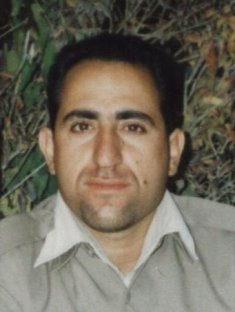
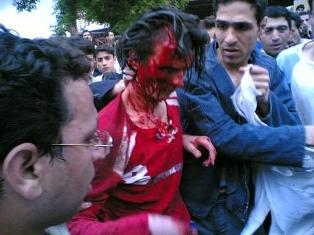
Reporters Without Borders today called for the case to be dropped against journalist Yosef Azizi Banitruf, sentenced to five years in jail after he exposed excessive use of force against demonstrators from the Arab community who clashed with security forces in Khuzestan in south-west Iran.

The trial of Azizi Banitrouf, a member of Iran’s Arab minority, was held over almost two years. The Tehran revolutionary court handed down its verdict against him on 20 August for “acting against national security”, “incitement to rebellion” and “relations with foreign officials”. He is free while awaiting an appeal.
The freelance journalist was arrested on 25 April 2005. His home was searched and working papers seized. He was released on bail to await trial on 28 June 2005.

“President Mahmoud Ahmadinejad is systematically exploiting the judicial system to crack down on journalists from the minority communities, for whom they often act as spokesperson,” the worldwide press freedom organisation said.

“Six of the seven journalists currently in prison in the country are of Kurdish or Arab origin. This outrageous gagging policy should be condemned by all those committed to free expression for Iranians,” it added.

Interviews given by Aziz Banitruf to foreign media and interviews he carried out himself with officials in the Arab world were produced in court as evidence against him.

He worked for 12 years for the daily Hamshari, owned by the mayor of Tehran, but was sacked when Ahmadinejad was elected the capital’s mayor in 2003 and conservatives were put in charge of the paper. He now works for several national publications and continues to contribute to foreign media. He is also a member of the board of the Iranian Writers’ Association.

The Tehran revolutionary court in June 2008 imposed an 11-year jail sentence on Iranian journalist of Kurdish origin, Mohammad Sadegh Kabovand, for “acting against national security” after he founded an organisation to defend human rights in Kurdistan. He was arrested in July 2007 and has since been imprisoned in Evin jail, Tehran.

Said Matinpour of the weekly Yarpagh, one of the leading Azeri community newspapers, was in June 2008 given an eight-year suspended sentence, also by a revolutionary court in the capital, for “having dealings with foreigners” and for “publicity against the regime”.

In yet another case, a journalist working for the official news agency ISNA, Mahboubeh Karami, was released on 26 August 2008 after paying bail of one hundred million toumens (80,000 euros) following her arrest on 13 June this year after criticising police brutality against demonstrators on a bus in Tehran. She is facing charges of “damaging national security” and “publicity against the regime”.

Reporters Without Borders defends imprisoned journalists and press freedom throughout the world. It has nine national sections (Austria, Belgium, Canada, France, Germany, Italy, Spain, Sweden and Switzerland). It has representatives in Bangkok, London, New York, Tokyo and Washington. And it has more than 120 correspondents worldwide.

Saturday, 23 August 2008

IMHRO: Five Year Prison Sentence for Ahwazi Arab Writer and Journalist is condemned

Iranian Minorities’ Human Rights Organisation (IMHRO)

Ref.IMHRO.20

2008-08-23


The Iranian government has sentenced Ahwazi writer and journalist Mr Yusef Azizi Bani Turfi to 5 years in prison. They have also banned his daughter Hanan from higher education.

In an interview with IMHRO, Mr. Yusef Azizi Bani Turfi, who is the author of several books, said that he had lost his job with the Hamshahri newspaper in September 2006 as result of his activities.

“They also banned my daughter Hanan, from postgraduate study in Tehran University, just because of my activities as a writer. She was never active in any political or cultural matters. She received her BA degree with a very good result. We complained about it to the Higher Education ministry, to MP’s in Iran and to anyone we could, but to no effect.”

“In March 2006 they also arrested my son Afnan in Syria and they kept him in detention for 42 days. Again all this happened to him just because of my activities.”

Yusef Azizi Bani Turfi, who lives in Tehran, was always a moderate voice in raising the profile of ethnic diversity in Iran, especially of Ahwazi Arabs and always acted in peaceful ways.

“I introduced Arabic literature to the Persian culture and also introduced Persian literature to the Arabic culture. I helped to introduce Ahwazi Arabs to the rest of Iran. Now as result of my activities I am banned from being employed in any job as a journalist. Is this my reward?”

As inflation in Iran is high it will make this very hard time for his family.

“After my last arrest, they released me on the bill, based on my house value and price; now I cannot sell it or rent it. Many news agencies in Iran like IRNA invited me to work with them, but when they found out that I’m banned from being employed by order of the government, they showed no further interest.”

Yusef Azizi Bani Turfi, who is a founder member of the Iranian Pen association, is now banned from working as a journalist and writer.

“They wanted me to be silent and to be a writer who will write whatever they order, but I’m not that sort of writer. All the problems that I face are just because I am an independent writer. I just reflect the facts, I’m not politician in terms of day to day activity, and I am just a researcher and writer.”

Reza Washahi a researcher on minorities in Iran told IMHRO, “This is typical of the restrictions and discrimination against those who write about minorities in Iran. Restrictions such as social bans always include members of the family as well, including more distant relatives. These are the pressure tools which the Iranian government use to keep everyone silent. Everyone knows Yusef Azizi is a peaceful activist, but even so, they do not tolerate him.”

“The Iranian government always accuses Ahwazi groups of violent activities and they ban them merely on the basis of such allegations, but by not tolerating people like Yusef Azizi they show this is only propaganda and that they are against any kind of activity. They just want to silence everyone.”

“The fact that they even stopped his daughter from going to higher education, just because her father’s peaceful activities, is appalling. This is against any basic human rights. Every person has a right to study.”

Condemnation and appeal

IMHRO condemns the court sentence of 5 years imprisonment for Mr Yusef Azizi Bani Turfi and we are appealing to the international community and human rights organisations to raise their voices in support of his case and asking the Iranian government to cancel the 5 year prison sentence imposed on him and also lift the social bans, restrictions and discriminations against him and his family.

Action
Please send your appeal to one of the addresses and express your concern over the 5 year sentence of Mr. Yusef Azizi Bani Turfi and ask the Iranian authorities to lift the social restrictions from him and his family.

Secretary General United Nations
The Honourable Ban Ki-moon

United Nations Headquarters,
Room S-3800,
New York,
NY 10017,
USA

Supreme Leader of Iran
Ayatollah Sayed ‘Ali Khamenei,
The Office of the Supreme Leader
Islamic Republic Street - Shahid Keshvar Doust Street
Tehran, Islamic Republic of Iran
E-mail via web site
http://www.leader.ir/

United Nations High Commissioner for Human Rights

Ms. Navanethem (Navi) Pillay
Office of the High Commissioner for Human Rights,

Palais des Nations,
CH-1211 Geneva 10,
Switzerland

Iranian President
Mahmoud Ahmadinejad
The Presidency
Palestine Avenue, Azerbaijan Intersection
Tehran, Islamic Republic of Iran
E-mail via web site
http://www.president.ir/en/


European Parliament Human Rights Committee
Ms. Hélène FLAUTRE
Bureau d'Hélène Flautre au Parlement Européen,

8G130, rue Wierz,
B-1049, Bruxelles,
Belgique

Head of the Judiciary

Ayatollah Mahmud Hashemi Shahroudi
Howzeh Riyasat-e Qoveh Qazaiyeh / Office of the Head of the Judiciary
Pasteur St, Vali Asr Ave
South of Serah-e Jomhouri,
Tehran 1316814737, Islamic Republic of Iran

Thursday, 21 August 2008

IFEX: BALUCHI JOURNALIST AND ACTIVIST EXECUTED, OTHERS AT RISK


Iran is using the death penalty against several journalists and activists for their work, say rights groups. On 4 August 2008, Yaghoub Mehrnehad, a social activist and journalist for the "Mardomsalari" ("Democracy") newspaper in Baluchistan, was executed, report the International Federation for Human Rights (FIDH) and the World Organisation Against Torture (OMCT). He was also executive director of Voice of Justice Youth Association, a local NGO registered with the authorities since 2002, and an advocate for the Baluchi minority.


According to the International Campaign for Human Rights in Iran (ICHRI), Mehrnehad was accused of membership in Jundallah (Soldiers of Allah), an armed Baluchi group. FIDH called the December 2007 trial "blatantly unfair" as it was behind closed doors and his family was not informed.

Human Rights Watch said the trials of Mehrnehad and social activist Farzad Kamangar, both sentenced to death in February, failed to meet international standards of fairness. ICHRI said no evidence was produced that Mehrnehad was in contact with Jundallah. Local sources said he had been tortured and forced to make false confessions.

In April 2007, Mehrnehad posted an article on his blog that criticised local officials and called for their resignation or removal from office. At a youth conference in the Baluchistan capital of Zahedan a few weeks later, Mehrnehad and other Voice of Justice Youth Association members confronted local officials. Intelligence agents later detained all six, but only Mehrnehad was held more than a few days.

"Authorities do not seem to make any distinction between peaceful advocacy for the right of minorities and terrorist attacks by armed groups," said OMCT. FIDH and OMCT demanded that authorities immediately release Yaghoub?s 16-year-old brother, Ebrahim Mehrnehad, detained since February for having publicised the death sentence. In March, Amnesty International expressed fears that Ebrahim and three other Baluchi civil society activists were at risk of torture.‏

Iran has executed about 200 people in 2008. On 27 July, 29 men were put to death, but only 10 of their names were published.

On the same day, said Reporters Without Borders (RSF), Kurdish freelance journalist Saman Rasoulpour was arrested at home in Mahabad, in Iran's predominantly Kurdish northwest. Two days earlier, some 200 Kurds staged a peaceful demonstration in Mahabad to demand the overturning of death sentences against journalists Adnan Hassanpour and Abdolvahed "Hiva" Botimar, and Kurdish teacher Farzad Kamangar.

Wednesday, 13 August 2008

HT: Iran sentences writer to 5 years prison


The Associated Press
Sunday, August 10, 2008

TEHRAN, Iran: The lawyer for an Iranian novelist says his client has been sentenced to five years in prison for supporting anti-government demonstrations.
Yusef Azizi is a member of Iran's ethnic Arab minority and has written novels as well as non-fiction books.

His lawyer, Saleh Nikbakht, says an Iranian court found Azizi guilty Sunday of "supporting unrest" during two days of protests in 2005. The rallies took place in oil-rich Khuzestan province, where most of Iran's minority Arabs live.

Azizi remains free on bail, pending an appeal. Arabs make up about 3 percent of Iran's 70 million people.

Sunday, 10 August 2008

IMHRO: Iranian Government Executed Baluchi Human Right Activist

Iranian Minorities’ Human Right Organisation (IMHRO)

Ref.IMHRO.19

2008-08-09

The Iranian government has executed Mr Yaghub Mehrnahad, a 28 year old Baluchi journalist, human rights and cultural activist, who criticised the Iranian government’s treatment of Baluchi people. He executed along side another Baluchi man named Abdul Nasser .T
[1]

A number of organisations, including Amnesty International, had called on the Iranian government to halt execution proceedings. IMHRO appealed on Yaghub Mehrnahad’s behalf on the 11 February 2008.

Yaghub Mehrnahad was the founder of Anjoman Sedayeh edalat (the Voice of Justice Association), which was recognised and registered by the Iranian government. The Voice of Justice Association is an NGO that organises events such as music concerts and educational courses for young Baluchi.

In May 2007 Yaghub Mehrnahad and five other members of the Voice of Justice Association were kidnapped and detained by Iranian security forces. This style of arrest is commonly employed by Iranian security forces.

The other five detainees were released but Yaghub Mehrnahad remained in detention. He was subjected to torture for several months before being executed in early August 2008.

IMHRO condemns the execution of Yaghub Mehrnahad, and considers it to be an act of oppression against the Baluchi people and all minorities in Iran. We call upon the Iranian government to secure the immediate release of all Baluchi activists and to permit international NGOs such as Amnesty International to visit prisons in Baluchistan.

“The execution of Yaghub Mehrnahad is not the execution of only one person; it is an attempt to execute a nation. By executing Mehrnahad the Iranian Government showed that it is against any civil and peaceful movement. They just want to push and encourage Baluchi into armed conflict, the things which Baluchi should avoid it.” IMHRO researcher Reza Washahi said.

According to amnesty report, in a meeting with his family Yaghub Mehrnahad said, "I am not guilty and this has happened unjustly and if I am executed, people will know that I have been executed without [having committed] a crime."
[2]

Appeal for immediate release of Ebrahim Mehrnahad

Ebrahim Mehrnahad, 16 years old, is the brother of Yaghub Mehrnahad. He was arrested in May 2007, and kept in solitary confinement for 72 days. They arrested him again in 2008.

He remains in detention. We call upon the world community to put pressure on the Iranian government to secure his immediate release.

Execution of Sunni Baluchi Clergy

In recent months the oppression of Sunni Baluchi has worsened. Some Sunni clergy have been executed without being give a fair trial or hearing.

Abdul Gurus Mula Zehi and Mohammad Yusuf Sohrabi were executed in Zahedan in April 2008. Both had made confessions whilst under torture. Shortly before the executions these forced confessions were broadcast on State TV. Broadcasting forced confessions is a common method of propaganda employed by Iranian intelligence services.

Background

There are at least six million Baluchi indigenous people living in southeast Iran. Like other minorities in Iran, they are subjected to abuses of their social, economic and political rights, and suffer from various forms of discrimination.

They are often banned from speaking in their mother tongue. As result of a lack of state investment, the unemployment rate is high. Many villages do not have any access to clean drinking water. Hospital conditions are poor as a result of lack of investment. Baluchi civil leaders are often arrested on false charges such as drug smuggling.

As Baluchi people are mainly Sunni, they also suffer from discrimination in job opportunities and education. The ideology of the theocratic government of Iran holds that all non-Shia are infidels.

Action
Please write, expressing your condemnation of the execution of 28 year old human rights activist Yaghub Mehrnahad, and requesting the immediate and unconditional release of 16 year old Ebrahim Mehrnahad, to:

Secretary General United Nations

The Honourable Ban Ki-moon

United Nations Headquarters,
Room S-3800,
New York, NY 10017,
USA

Supreme Leader of Iran
Sayyed Ali Khamenei
E-mail via web site
http://www.leader.ir/

United Nations High Commissioner for Human Rights

Navanethem (Navi) Pillay,
Office of the High Commissioner for Human Rights,

Palais des Nations,
CH-1211 Geneva 10,
Switzerland

Head of the Judiciary
Ayatollah Mahmud Hashemi Shahroudi
Howzeh Riyasat-e Qoveh Qazaiyeh / Office of the Head of the Judiciary
Pasteur St, Vali Asr Ave
South of Serah-e Jomhouri,
Tehran 1316814737, Islamic Republic of Iran

Iranian President

Mahmud Ahmadinejad
E-mail via web site
http://www.president.ir/en/

European Parliament Human Rights Committee
Ms Hélène FLAUTRE
Bureau d'Hélène Flautre au Parlement Européen,

8G130,rue Wierz,
B-1049, Bruxelles,
Belgique


[1] http://sb.isna.ir/mainnews.php?ID=News-14744

[2] AI Index: MDE 13/110/2008

Friday, 8 August 2008

IMHRO Raised the Issue of Minorities in Iran with Foreign and Commonwealth Office in London

Iranian Minorities’ Human Right Organisation (IMHRO)

2008-08-07

Ref.IMHRO.18

IMHRO met with foreign office and commonwealth officials in London on 7th of august to discuss the issue of minorities in Iran.


Meeting was very successful and gave us opportunity to talk about minorities’ human right in Iran.


From IMHRO, Reza Washahi a researcher on minorities in Iran attended the meeting.

“There was very good understanding and common ground in the meeting”, he said.


Reza Washahi and FCO official

IMHRO is committed to Lobby states and NGO’s regard of minorities’ human right in Iran, both ethnic and religious one.

Tuesday, 5 August 2008

CNN: Iran: Religious minority reports arson attacks


Iran's Baha'i community -- a religious minority that has faced persecution in the Islamic republic -- is reporting a string of arson attacks targeting homes and vehicles.

A house "went up in flames" in Kerman on July 18 only weeks after the residents' car had been torched, said Bani Dugal, principal representative of the Baha'i International Community to the United Nations. Those incidents followed a series of threatening phone calls, Dugal said.

"As would be expected in the light of the mistreatment Baha'is in Iran are routinely receiving, the officials who investigated the fire either ignored or dismissed obvious signs of suspicious activity, including a muffled explosion, simply saying that it was the result of an electrical problem," she said.

The group also listed several incidents since February, and Dugal said there had been at least a dozen cases of arson targeting the Baha'is in the last 15 months.

Mohammad Mohammadi, press attache for the Iranian delegation at the United Nations in New York, said the Baha'is are just repeating claims they have made before.

"They are full of claims, not verified by anybody," he said.

The attacks, reported on Monday by the Baha'i movement, come on the heels of the arrests of seven members of Iran's national Baha'i coordinating group in March and May. The Baha'is say the seven have been jailed in Evin Prison in Tehran without charge.

"These latest attacks follow the authorities' attempts to deprive the Iranian Baha'i community of its leadership," Dugal said.

"As Baha'is worldwide watch with alarm this escalation in violence ... their fears that a sinister plan of persecution is unfolding become increasingly confirmed. Their only hope is that enough voices of protests are raised around the world to compel the government in Iran to put an end to this violence."

Sarah Leah Whitson, the Human Rights Watch Middle East director, said "there's been an uptick" in the repression of the Bahai community in Iran.

"Such arson attacks would be a natural outcome of the government's most recent campaign to vilify and attack the Baha'i community, disparaging them and their beliefs in the press with a spate of anti-Baha'i articles in the government-run press and arresting several of the community's leaders on still-unspecified charges," Human Rights Watch's Whitson said.

"When the top religious authorities insist on characterizing Baha'is as apostates and encourage a climate of hate against the Baha'i community, one would well expect these sorts of violent outbursts to be directed against them."

The government has said that the seven people recently detained were held for "security issues" and that the Baha'is are members of a group working "against national interest," a claim denounced by the Baha'is.

The Baha'is say the latest arrests are part of a pattern of religious persecution that began in

1979. That's when the monarchy of the Shah of Iran was toppled and an Islamic republic was created.

The Baha'is say members of its community have been killed, jailed and "otherwise oppressed" because of their religion.

Dugal has said the government's philosophies were based largely on the idea that there could be "no prophet following Mohammed" and that the faith "poses a theological challenge to this belief."

The Baha'is regard their founder Baha'u'llah as the most recent in the line of Messengers of God that stretches back beyond recorded time and that includes Abraham, Moses, Buddha, Krishna, Zoroaster, Christ and Mohammed.

The Baha'is-- regarded as the largest non-Muslim religious minority in Iran -- say they have 5 million members across the globe, and about 300,000 in Iran.

Sunday, 3 August 2008

amnesty: Iran: End discrimination against the Kurdish minority


Iran’s government is failing in its duty to prevent discrimination and human rights abuses against its Kurdish citizens, particularly women, said Amnesty International in a new report published today.

The organization expressed fears that the repression of Kurdish Iranians, particularly human rights defenders, is intensifying. The report cites examples of religious and cultural discrimination against the estimated 12 million Kurds who live in Iran and form around 15 per cent of the population.

It focuses on issues related to housing, education and employment. Human rights defenders and media workers are also being targeted for speaking out. “Iran’s constitution provides for equality of all Iranians before the law. But, as our report shows, this is not the reality for Kurds in Iran. The Iranian government has not taken sufficient steps to eliminate discrimination, or to end the cycle of violence against women and punish those responsible,” said Amnesty International.

The report says that Kurdish women face a double challenge to have their rights recognized -- as members of a marginalised ethnic minority, and as women in a predominantly patriarchal society. Although women and girls form the backbone of economic activity in the Kurdish areas, strict social codes are used to justify denial of their human rights. Such codes mean that it can be very difficult for government officials to investigate inequalities in girls’ education, early and forced marriages, and domestic violence against Kurdish girls and women -- and the severe consequences of some of these abuses, including “honour killings” and suicide. “Kurdish women are victims of violence on a daily basis and face discrimination from state officials, groups or individuals, including family members.

Iranian authorities are obliged to exercise due diligence in eradicating violence against women in the home and in the community but this just isn’t happening,” Amnesty International said.

The report Iran: Human rights abuses against the Kurdish minority recognizes that while expression of Kurdish culture, such as dress and music, is generally respected and that the Kurdish language is used in some broadcasts and publications, the Kurdish minority continues to suffer deep-rooted discrimination. Recent cases have highlighted particular human rights violations involving Kurds:

* Farzad Kamangar, Ali Heydariyan and Farhad Vakili, all ethnic Kurds, were sentenced to death in February 2008 after conviction of “moharebeh”, (enmity against God), following a grossly flawed process that fell far short of international standards for a fair trial. This is a charge levelled against those accused of taking up arms against the state, apparently in connection with their alleged membership of the armed group, the Kurdistan Workers Party (PKK), which carries out attacks in Turkey.

Ali Heydariyan and Farhad Vakili were also sentenced to 10 years’ imprisonment, apparently for forging documents. Under Iranian law, they must serve their prison sentences before being executed. Human Rights Activists in Iran reported that when prison authorities at Raja'i Shahr prison in Tehran province told Farzad Kamangar, a 32 year old teacher, of the Supreme Court's decision, they asked him to write a letter seeking clemency. He refused to do this, as it would have been an acknowledgement of guilt, and he has always denied committing any crime. On 11 July his death sentence was upheld by the Supreme Court and could be carried out at any time.

* In May this year Mohammad Sadiq Kabudvand was sentenced to 11 years’ imprisonment by Branch 15 of the Revolutionary Court in Tehran. The sentence apparently comprises 10 years’ imprisonment for “acting against state security by establishing the Human Rights Organization of Kurdistan (HROK)” and one year’s imprisonment for “propaganda against the system”.

The verdict followed a closed trial session. Amnesty International considers Mohammad Sadiq Kabudvand to be a prisoner of conscience, held solely on account of his peaceful exercise of his rights to freedom of expression and association during his work as chair of the HROK and his activities as a journalist. Such rights are expressly recognized in the International Covenant on Civil and Political Rights (ICCPR), to which Iran is a state party.

* Psychology student Hana Abdi was arrested on 4 November 2007 at her grandfather’s home in Sanandaj. She was held incommunicado for three months. In June this year she was sentenced to five years’ imprisonment, to be served in exile in West Azerbaijan province, in the small town of Germi, on the border with the Republic of Azerbaijan. According to her lawyer, Branch 2 of the Revolutionary Court in Sanandaj convicted her of "gathering and colluding to commit a crime against national security." She is a member of the Campaign for Equality, an Iranian women’s rights initiative that is seeking an end to legalized discrimination against women in Iran.

Amnesty International considers Hana Abdi to be a prisoner of conscience, detained solely for the peaceful exercise of her right to freedom of expression and association, and that the charge brought against her is politically motivated. “We urge the Iranian authorities to take concrete measures to end any discrimination and associated human rights violations that Kurds, indeed all minorities in Iran, face,” said Amnesty International.

“Kurds and all other members of minority communities in Iran, men, women and children, are entitled to enjoy their full range of human rights.

The Iranian authorities should promote and protect the rights of human rights defenders, including women’s rights activists, and abide by their obligations under international human rights law.” Background The 57 page report Iran: Human rights abuses against the Kurdish minority (AI Index: MDE 13/088/2008) is the latest in a series of Amnesty International reports on human rights abuses against ethnic and cultural minorities in Iran .

Previous reports have described abuses against Ahwazi Arabs and the Baluchi minority. Amnesty International has previously raised many of the concerns and cases in this report with the Iranian authorities but without adequate response. They rarely respond to the organization and have not permitted Amnesty International access to Iran to investigate human rights for more than 28 years.

Notes from IMHRO: For having a copy of amnesty reports please go to www.amnesty.org or send us e-mail that we can send you copy of it.

Monday, 28 July 2008

RFERL: Traditional Azeri Wedding Leads To Groom's Arrest In Iran


by Khadija Ismaylova

BAKU -- Vedud Asadi is well-known for his work promoting the cultural and language rights of Iran's Azeri minority, so it's little surprise that he celebrated his wedding with a nod to his ethnic heritage.

Guests sang folk songs and danced traditional dances -- but the flag may have been the icing on the cake for Iranian authorities who came to arrest him two weeks after the event, according to his sister, Sumayya Asadi.

"I think it was because we put the image of the Azerbaijan's flag on the wedding cake," she says. "We sang only Azerbaijani songs, there were no Persian songs. We all were speaking Turkic [Azeri], [and there was] Turkic dancing. There is no need for Persian in a Turkic wedding. We used our flag -- we don't need others' flags. I think Vedud was arrested for this, because the first thing they asked for when they initiated the search was the wedding film.

"Vedud Asadi's bride, Zahra Purasad, says the secret police who arrived at the newlyweds' flat in Rasht on the evening of July 22 did not give any reasons for her husband's arrest. "I asked, but they did not say anything," Purasad tells RFE/RL's Azerbaijani Service.

The Iranian authorities were already familiar with Asadi's activism. In 2006, the former chairman of the Islamic Students Union at northwestern Iran's Ardebil University was arrested for participating in a protest against cartoons that depicted Azeris as cockroaches.

His family says he spent about 3 1/2 months in prison without being charged following that arrest, and they now fear he will be imprisoned again. His wife knows only that he was taken to a local court on July 24, but has no information about the outcome in court or his current whereabouts.

The ethnic-Azeri minority makes up 25-33 percent of Iran's population. While the Iranian Constitution provides language and cultural rights for the country's minorities, the regime has banned the teaching of the Azeri language in schools, and harassed and jailed activists like Asadi.

Sumayya Asadi says the officers who arrested her brother seized his Azeri-language books, material on the history of Azeris, CDs, and his computer.

Iranian authorities often cite the promotion of "pan-Turkism" as the reason for detaining ethnic Azeris. But Sumayya Asadi says her brother is no separatist, he simply believes that his people's cultural and linguistic rights are worth fighting for.

She says that if she is Azeri, she has the right to speak Azeri. "I should not have to speak Persian.... If there are 35 million Turks [Azeris] in the country, shouldn't these 35 million have the right to speak, write, and communicate in their own language?"

As for Asadi's wife, when asked what she feels about the arrest of her husband just two weeks after the wedding, she says she has no regrets for their actions at their wedding.

"He was arrested for his nation, he did not do anything bad," she says. "Not for stealing, not for drinking alcohol or immoral behavior -- for his nation only. I am proud of him."

Friday, 25 July 2008

Compass Direct News: IRAN: TORTURED CHRISTIAN FLEES


'I have no doubt they wanted to kill me,’ says former Muslim.ANKARA, July 21 (Compass Direct News) – Days after his release from a month of interrogations and severe torture under secret police custody, Iranian Christian Mohsen Namvar has fled across the border into Turkey with his family.

Traveling by train, the badly beaten Christian arrived July 2 in eastern Turkey with his wife and son.

Namvar, 44, had been held incommunicado by a branch of Sepah (the Iranian Revolutionary Guards) from May 31 until June 26, when authorities told his family they were releasing him “temporarily.”

Although the secret police demanded $43,000 in bail, officers refused to issue a court receipt for the family’s cash payment.

At the time of his release, Namvar was experiencing fever, severe back pain, extremely high blood pressure, uncontrollable shaking of his limbs and recurring short-term memory loss.
“I have no doubt they wanted to kill me,” Namvar told Compass.
According to Namvar, who converted from Islam to Christianity as a teenager, his severe physical mistreatment stemmed from his refusal to give the police any names or information about other converts and house church groups in Iran.

In the spring of 2007, he had been arrested and severely tortured with electrical shocks, allegedly for baptizing Muslims who had become Christians. Three months after back surgery for those injuries, he regained the ability to walk, but still suffered pain and discomfort.
Namvar presented himself last week to the office of the United Nations High Commissioner for Refugees (UNHCR) in Ankara to apply for status as an asylum-seeker.

He and his family were assigned by the UNHCR to relocate in one of 30 designated satellite cities in Turkey, where he is required to sign in daily at the local police station. They must wait 11 months, until June 8, 2009, for a UNHCR interview in which they will detail their reasons for requesting asylum.

“We are tired in our minds, and very sad,” Namvar’s wife said after learning they must wait nearly a year in Turkey before even presenting her husband’s case. “We were under so much pressure in Iran, and again we are facing it here.”

While her husband was under arrest, she had been subjected to a second police ransacking of their home, repeated telephone calls filled with slander and death threats and one attempt to kidnap their son from his school.

Namvar said he was surprised that the interviewing officer at the UNHCR spent only six minutes registering information from their passports. Following standard UNHCR protocol, the official did not ask why they had fled from their country, nor did he collect copies of documents they had brought concerning his case.

Nearly 15,000 applications for refugee or asylum status are now in process at the Ankara office, which is the largest UNHCR center in Europe apart from the Geneva headquarters.
“But even if they have strong evidence for their case, at best it takes three to four years for someone to be resettled through our office,” UNHCR external affairs officer Metin Corabatir told Compass.

Police Pressures

Although he earned his living as a miner, Namvar had been active in preaching and teaching the message of Christ across northern Iran since the early 1990s.

His first brush with the authorities came when he was caught in 2001 giving out Christian literature at a gas station. “I spent three days in jail,” he recalled.

After that, local police demanded that he obtain permission each time he wanted to enter the city near his home, in effect banning him from the region.

“The police created a very bad atmosphere there against us,” Namvar said, “so no one would even respond to our greetings on the street.”

Because of this, Namvar moved his family to Tehran. But he was unable to find work, due to his police record and the requirement on all job applications to state his religion.
For the past seven years, he has supported himself by translating books from English into Farsi, while continuing to visit and minister among various house church groups.
“I never knew God until Jesus showed Himself to me in a dream,” Namvar said, recalling his conversion to Christianity 29 years ago. “But ever since then, I have followed Jesus and told others about Him.”


Under Iran’s hardline Shiite government, a Muslim who converts to Christianity has committed apostasy, which is punishable by death.

Iranian Christians Mahmood Matin and Arash Bandari have been jailed since May 15 in Shiraz, where they were arrested on “suspicion” of apostasy.

Under a draft law under discussion this month in the Iranian parliament, the “optional” death penalty now in force for apostasy would become obligatory.

END

Thursday, 17 July 2008

IMHRO met with Foreign and Commonwealth Office in London

Iranian Minorities’ Human Right Organisation (IMHRO)

Ref.IMHRO.17

Press Release

2008-07-17


On 15 July, IMHRO's member met the Foreign and Commonwealth Office in London, regarding the situation of ethnic and religious minorities in Iran.

In a meeting with FCO officials, Mr. Reza Washahi, IMHRO's researcher discussed various issues related to both ethnic and religious minorities in Iran.

IMHRO is committed to highlighting and publicising the plight of the minorities of Iran to the World by lobbying and rising awareness of situation of Minorities in Iran.

Thursday, 3 July 2008

IMHRO: Free Mohammad Sadigh Kabodwand

Iranian Minorities’ Human Rights Organisation (IMHRO)

Ref.IMHRO.16

2008-07-03


Iranian revolutionary court, branch 15 in Tehran has sentenced Mr. Mohammad Sadigh Kabodwand, founder of the Kurdish Human Rights Centre to 11 years in prison.

Mr. Kabodwand who is kept in harsh conditions had a heart attack 2 months ago and he has been denied medical access and treatment.

The Iranian government accused him of “acts against national security”, having for the seventh time filtered the web site of the human rights organisation of Kurdistan.

Reza Washahi, researcher for minorities, told IMHRO that in revolutionary court style in Iran, there is no jury present, it is always behind close doors, international observers are not allowed to attend, lawyers usually do not have access to their client’s file until the last minute before the trial begins and most of the evidence is based on torture; judges are usually hand-picked by the security service. Detainees are kept in inhuman conditions and often under torture. In general all the process of pre-trial and the hearing are not according to international standards and covenants.

IMHRO strongly condemns the 11 year sentence of Mr. Mohammad Sadigh Kabodwand and thinks he should be rewarded not punished for being a human right activist. IMHRO also wants to highlight the fact that human rights activities are unfortunately considered to be against national security in Iran; this is a most clear sign of a totalitarian government.

IMHRO urges the Iranian government to release immediately and to compensate Mr. Mohammad Sadigh Kabodwand for the ill treatment he has received during his detention.

Background

The Kurdish minority in Iran which numbers up to 6 million people live in the west midland, north-west and north-east areas of Iran.

Iranian Kurdish people are denied social and political rights. Various human rights organisations report that hundreds of Kurds are in prison, some of them there for a very long time.

Recently reports indicate that there is huge arsenic pollution in the city of Ghorweh as a result of Gold mining by Chinese companies in Sargonay mine in south-east Kurdistan.

Mrs. Hana Abdi who is a campaigner for equality rights for women has been sentenced to 5 years in prison.

Action

Please write to the one of the following and share your concern about Mohammad Sadigh Kabodwand case. Write to the Iranian government and demand immediate release of Mohammad Sadigh Kabodwand.


Secretary General United Nations
The Honourable Ban Ki-moon

United Nations Headquarters
Room S-3800
New York, NY 10017
USA

Supreme Leader of Iran
Sayyed Ali Khamenei
E-mail via web site
http://www.leader.ir/

United Nations High Commissioner for Human Rights

Ms Louise Arbour
Office of the High Commissioner for Human Rights

Palais des Nations
CH-1211 Geneva 10,
Switzerland

Head of the Judiciary

Ayatollah Mahmud Hashemi Shahroudi
Howzeh Riyasat-e Qoveh Qazaiyeh / Office of the Head of the Judiciary
Pasteur St, Vali Asr Ave
South of Serah-e Jomhouri,
Tehran 1316814737, Islamic Republic of Iran

Iranian President

Mahmud Ahmadinejad
E-mail via web site
http://www.president.ir/en/

European parliament Human Rights committee
Ms Hélène FLAUTRE
Bureau d'Hélène Flautre au Parlement européen

8G130,rue Wierz
B-1049, Bruxelles,
Belgique


Thursday, 19 June 2008

IMHRO: Revolutionary Guards had opened fire on Turk farmers

Iranian Minorities’ Human Rights Organisation (IMHRO)

Ref.IMHRO.15

2008-06-24


Iranian revolutionary guards opened fire on Turkish farmers after they resisted the confiscation of their lands. According to Germany Deutsche Welle Persian website the attack happened in villages along the Aras River. This was at a time when the High Court had even voted in favour of the villagers.

As a result of shooting Mr. Nor Al Din Dargahi was killed. After that they beat his old father.

After the shooting the revolutionary guards searched every where to find and destroy possible cameras and any photos of the incident.

Among the injured were women and children. When the family went to hospital to visit them, they were beaten by the officers.

IMHRO condemns this massacre and the confiscation of Turkish farmers’ land and asks for a full investigation of this case in order to bring those responsible to justice.

Turk activist killed under torture

Farhad Mohseni Negarestan has been killed under torture while he was being interrogated by the Iranian intelligence service. Aged 25, he was arrested 2 years ago when he was injured by shooting during a demonstration which took place in Azerbaijan, to the north-west of Iran.

The government also have threatened to persecute his family if they speak out about their son’s death. They have also spread rumours that he had committed suicide. His body was buried without having any post-mortem examination.

Some reports suggest he died under interrogation while being subjected to electric shock treatment.

Reza Washahi, a researcher on minorities, told IMHRO that the death of Mr Farhad Mohseni Negarestan clearly shows how Turkish activists are being treated in prison.

IMHRO condemns the murder of Mr Farhad Mohseni Negarestan and asks for a full investigation to bring those involved to account.

Background

Turks in Iran number up to 30 million and face discrimination in many aspects of their lives. Turks in Iran cannot receive education in their mother tongue. It was in 1925 that their area was annexed by Iran.

Sunni minorities among them are also under pressure and suffer discrimination. For example, Sunni farmers do not receive government subsidies or loans.

In recent years after the discovery of oil in this area, the Iranian government started to change its demography by moving non-Turks to this area and confiscating the land of the Turkish people. In Soldoz and Nagahdeh city the government opened fire on a protesting crowd and killed dozens of people, including 17 year old Hussein Fathi Poor.

In recent years the civil movement has developed quickly and many activists including students have been arrested. In the Turkish area free media is banned and local Turkish papers are not allowed to be published.

Action

Please write to one of the following below and express your concern about the recent arrests of Turkish activists in Iran and ask for the immediate release of all Turkish prisoners of conscience in Iran. Please remind the Iranian government that as a state it is party to the international covenant on civil and political rights, which states in article one “All peoples have the right of self-determination. By virtue of that right they may freely determine their political status and freely pursue their economic, social and cultural development.” Therefore they should recognise the rights of Turkish people and other minorities in Iran. Please ask the Iranian government to fully investigate the shooting of farmers and the death of Farhad Mohseni Negarestan and bring those responsible to justice.


Secretary General United Nations
The Honourable Ban Ki-moon

United Nations Headquarters
Room S-3800
New York, NY 10017
USA

Supreme Leader of Iran
Sayyed Ali Khamenei
E-mail via web site
http://www.leader.ir/

United Nations High Commissioner for Human Rights

Ms Louise Arbour
Office of the High Commissioner for Human Rights

Palais des Nations CH-1211 Geneva 10,
Switzerland

Head of the Judiciary
Ayatollah Mahmud Hashemi Shahroudi
Howzeh Riyasat-e Qoveh Qazaiyeh / Office of the Head of the Judiciary
Pasteur St., Vali Asr Ave.,
South of Serah-e Jomhouri,
Tehran 1316814737, Islamic Republic of Iran


Iranian President
Mahmud Ahmadinejad
E-mail via web site
http://www.president.ir/en/


European parliament Human Rights committee
Ms Hélène FLAUTRE
Bureau d'Hélène Flautre au Parlement européen

8G130,rue Wierz
B-1049, Bruxelles,
Belgique


Tuesday, 17 June 2008

Amnesty: Fear of forcible return


PUBLIC AI Index: MDE 14/013/2008
29 May 2008

UA 144/08 Fear of forcible return/ fear of torture and ill-treatment / fear of death penalty

IRAQ Sohrab Bawi (alias Imad) (m), aged 33 ] brothers, Iranian nationals from Arab
Mohsen Bawi (m), aged 35 ] ethnic community

Sohrab Bawi (also known as Imad) and his brother Mohsen Bawi, Iranian nationals of Arab ethnicity, are at risk of being forcibly returned from Iraq to Iran. If returned, they would face torture and possibly the death penalty.

In 2006, Imad and Mohsen Bawi were amongst five brothers convicted after an unfair trial of hiding explosives, establishing an illegal group and propaganda against the government (see UA 233/05, MDE 13/051/2005, 9 September 2005, and follow-ups). Imad and Mohsen Bawi were both serving lengthy sentences at different prisons in separate provinces of Iran, but had been given leave from prison to spend time with their family following the execution of their brother, Zamel Bawi, on 29 January 2008. The two men fled to Iraq on 16 February, and were arrested on the border in Basra. They have been held in a detention centre since then, and have appeared at least three times, separately, before a court in Basra, charged with illegal entry into Iraq. Imad Bawi is due to appear again before the Court on 2 June. They are both at risk of being imminently returned to Iran where they would face torture and new charges could be brought against them, resulting in possible death sentences.

The brothers were arrested by the Iranian authorities in August 2005. They come from a prominent family in the city of Ahvaz, in Khuzestan province, western Iran. Mohsen Bawi is an IT consultant and Imad Bawi, a law student, was on vacation from Lebanese University of Beirut at the time of their arrest. The charges against the brothers were connected with a series of bomb attacks in the province of Khuzestan, where most of Iran's Arab minority lives. They were tried behind closed doors and did not receive a fair trial; they were granted only very limited access to legal counsel and Mohsen Bawi is alleged to have been tortured or otherwise ill-treated in pre-trial detention. Their lawyers were notified of the trial date only one or two days in advance, instead of the minimum of five days stipulated in Article 64 of the Civil Procedure Code, and were unable, therefore, to study their clients' files fully before the trial. The two brothers were not allowed to meet in private with their lawyers, despite the latter's requests and a statement made by Iran's Head of the Judiciary on 20 May 2006 that "Nobody has the right to... deprive the accused of the right of visits by their family and lawyer. They must know quite clearly that they may request private meetings with their lawyers."

Imad Bawi was initially sentenced to death in October 2005. This was later commuted to 25 years' imprisonment. Mohsen Bawi was sentenced to 30 years' imprisonment.

BACKGROUND INFORMATION
Much of Iran's Arab community lives in the province of Khuzestan, which borders Iraq. It is strategically important because it is the site of much of Iran's oil reserves, but the Arab population does not feel it has benefited as much from the oil revenue as the Persian population. There were mass demonstrations in April 2005, after it was alleged that the government planned to disperse the country's Arab population or to force them to relinquish their Arab identity. Following bomb explosions in Ahvaz City in June and October 2005, which killed at least 14 people, and explosions at oil installations in September and October 2005, hundreds of people were arrested. Further bombings on 24 January 2006, in which at least six people were killed, were followed by further mass arrests. At least 17 men have now been executed as a result of their alleged involvement in the bombings. It is not clear if another man was executed or died in custody.

As a state party to the International Covenant on Civil and Political Rights (ICCPR), Iraq has an obligation not to return anyone to a country where they would be at risk of torture or other ill-treatment. Furthermore, the international law principle of non-refoulement, a principle binding on all states, prohibits the forcible return of anyone to a country where they would be at risk of serious human rights abuses, including torture.

Four Iranian men, members of Iran's Arab community, are believed to have been forcibly returned from Syria to Iran in 2006 (see UA 132/06, MDE 24/037/2006, 15 May 2006 and follow ups and UA 67/07, MDE 24/018/2007, 16 March 2007). At least one of these men is facing a death sentence.

RECOMMENDED ACTION: Please send appeals to arrive as quickly as possible, in Arabic, Persian, French, English or your own language:
- urging the Iraqi authorities not to forcibly return the two brothers, Sohrab (aka Imad) Bawi and Mohsen Bawi to Iran where they would be at risk of torture and possibly execution,
- reminding the Iraqi government of its obligations under international law that they must not forcibly return individuals to a country where they would be at risk of serious human rights violations, including torture.

APPEALS TO: Email addresses for the Iraqi authorities are proving unreliable. If there is no email address given, or if your email bounces, please send appeals to the authorities via the Iraqi embassy or diplomatic representative in your country, asking them to forward your appeals to:

President
Jalal Talabani
E-mail: questions@iraqipresidency.net
Salutation: Your Excellency

Prime Minister
Nuri Kamil al-Maliki
Salutation: Your Excellency

Minister of Justice
Safi al-Din al-Safi
E-mail: minister@iraqi-justice.org
deputy@iraqi-justice.org
Salutation: Your Excellency

Minister of Foreign Affairs
Hoshyar Zebari
Salutation: Your Excellency

COPIES TO: diplomatic representatives of Iraq accredited to your country. Ask them to send copies to the Human Rights Minister, Wajdan Mikhail.

PLEASE SEND APPEALS IMMEDIATELY. Check with the International Secretariat, or your section office, if sending appeals after 10 July 2008.

Tuesday, 3 June 2008

IMHRO: Iranian government increased pressure On Turks

Iranian Minorities’ Human Right Organisation (IMHRO)

Ref.IMHRO.14

2008-06-03

Iranian government had increased pressure on ethnic Turks. Recent crack down happened on eve of second years on protest of Turks against discrimination. In recent weeks security forces heavily spread around and inside the cities.

Reportedly many cultural and human right activists, including students had arrested. Still not clear where they kept, but reported fear of torture and ill treatment.

Akbar Lakestani


Akbar Lassani who was Member of council of Shout city, sentenced to three years prison as he speak out about condition of Turks.

Mohammad Reza Mokhtari


A music teacher from city of Myaneh had arrested for his cultural activity. Last year governmental Islamic licence office had close down his music shop as he used Turkish name, instead of Persian name for his shop. They also rejected his right to be a candidate for parliamentary election.

Akbar Hussein Zadeh and Masha Allah and Amin Razmi

Arrested in city of Tabriz, along more than 100 others by security forces. Still not clear where they are.

Reza Washahi researcher for IMHRO said: it is unacceptable that in this day and age up to 30 Million people could not educate in their mother tongue and for little protest, young men and women ending in dark cell of Iranian intelligence interrogation. IMHRO fully supporting civil movement of Turks in Iran.

Back Ground

Turks in Iran which numbered up to 30 million are facing discrimination in many aspects of their life. Turks in Iran can not educate in their mother tongue. In 1925 their area had annexed by Iran.

Sunni Minorities among them also under pressure and discriminate. For example Sunni framers are not receiving government subsidising and loans.

In recent years Iranian government after discovering oil in this area, started to change the demography by moving non Turks to this area. In Soldoz or Nagahdeh city government had opened fire on protesting crowd and kills dozen of people, including 17 years old Hussein Fathi Poor.

In recent years civil movement speeded up and many activist including student had arrested. In Turkish area free media is banned and local Turkish paper had not allowed publishing.

Action

Please write to the Iranian one of the suggested addresses below and express your concern about recent arrest of Turkish activist in Iran and ask for immediate release of all Turkish prisoners of conscience. Please remind Iranian government that as state party to the international covenant on civil and political rights, which states in article one” All peoples have the right of self-determination. By virtue of that right they freely determine their political status and freely pursue their economic, social and cultural development.”, Therefore they should recognise the right Of Turkish people and other minorities in Iran.

Secretary General United Nations

The Honourable Ban Ki-moon

United Nations Headquarters
Room S-3800New York,
NY 10017
USA

Supreme leader of Iran
Sayyed Ali Khamenei
E-mail via web site
http://www.leader.ir/

Head of the Judiciary
Ayatollah Mahmud Hashemi Shahroudi
Howzeh Riyasat-e Qoveh Qazaiyeh / Office of the Head of the Judiciary
Pasteur St., Vali Asr Ave.,
South of Serah-e Jomhouri,
Tehran 1316814737, Islamic Republic of Iran

United Nations High Commissioner for Human Rights

Ms Louise Arbour
Office of the High Commissioner for Human Rights

Palais des Nations
CH-1211 Geneva 10,
Switzerland

Iranian president
Mahmud Ahmadinejad
E-mail via web site
http://www.president.ir/en/

European parliament Human Rights committee
Ms Hélène FLAUTRE
Bureau d'Hélène Flautre

au Parlement européen
8G130, rue WierzB-1049,
B-1049 Bruxelles,
Belgique


Thursday, 29 May 2008

Amnesty International Report 2008


IRAN

The authorities continued to suppress dissent. Journalists, writers, scholars, and women’s rights and community activists were subject to arbitrary arrest, travel bans, closure of their NGOs and harassment. Armed opposition, mainly by Kurdish and Baluchi groups, continued, as did state repression of Iran’s minority communities. Discrimination against women remained entrenched in law and practice. Torture and other ill-treatment were widespread in prisons and detention centres. A security clampdown announced in April was marked by a sharp rise in executions; at least 335 people were executed, among them seven child offenders. Sentences of stoning to death, amputation and flogging continued to be passed and carried out.

Background

Iran’s uranium enrichment programme continued to be a focus of international tension. Israeli and US authorities refused to rule out the possibility of military action against Iran. In March, the UN Security Council imposed further sanctions. In September, the US government designated Iran’s Revolutionary Guards a “terrorist organization” for allegedly supporting insurgents in Iraq and Afghanistan. In December, US intelligence agencies published a report stating that Iran had ended any nuclear weapons programme in 2003. The same month the UN General Assembly condemned the human rights situation in Iran.

Ayatollah Meshkini, Head of the Assembly of Experts that oversees the appointment of the Supreme Leader, died in July. He was replaced by former President Hashemi Rafsanjani.
Increasing numbers of Iranians faced poverty as the economic situation deteriorated. In June rioting followed the introduction of petrol rationing. A three-month strike by workers at the Haft Tapeh Sugar Plant in Khuzestan Province over unpaid wages and benefits was forcibly broken up by security forces in October. Haft Tapeh and other workers and teachers staged large demonstrations, and arrests were made.

Freedom of expression

Vaguely worded laws and harsh practices resulted in widespread repression of peaceful dissent. Demonstrations frequently led to mass arrests and unfair trials. The authorities maintained tight restrictions on internet access. Journalists, academics and webloggers, including some dual nationals, were detained and sentenced to prison or flogging and several publications were closed down. In April, the Minister of Intelligence, Gholam Hossein Eje’i, publicly accused students and the women’s movement of being part of an attempt to bring about the “soft overthrow” of the Iranian government.

Ali Farahbakhsh, a journalist, was granted an early conditional release in October after 11 months in detention. He was convicted of “espionage” and “receiving money from foreigners” in connection with his attendance at a media conference in Thailand.

Human rights defenders

Independent human rights groups and other NGOs continued to face long delays, often lasting years, in obtaining official registration, leaving them at risk of closure for carrying out illegal activities. Students campaigning for greater respect for human rights faced reprisals, including arbitrary arrest and torture. Individual human rights defenders were persecuted for their work; some were prisoners of conscience.

Emaddedin Baghi, Head of the Association for the Defence of Prisoners and a leading campaigner against the death penalty, was detained in October following a summons relating to accusations of “endangering national security”. While the family was posting bail, they were told that he now had to serve a suspended sentence imposed in 2003, including for “printing lies”. Another three-year prison term imposed on him in July 2007 for “propaganda in favour of opponents”, arising from his work on behalf of Iranian Ahwazi Arabs sentenced to death after unfair trials, was pending appeal. His wife, Fatemeh Kamali Ahmad Sarahi, and daughter, Maryam Baghi, were given three-year suspended prison sentences in October for “meeting and colluding with the aim of disrupting national security” after attending a human rights workshop in Dubai in 2004. In December he suffered a seizure while in custody.

Mansour Ossanlu, head of the Union of Workers of the Tehran and Suburbs Bus Company, was detained in July after visiting Europe to gather support for the independent trade union movement in Iran. Following international protests he received medical treatment for an eye injury reportedly sustained during a dispute with prison officials during an earlier detention. In October an appeals court upheld a five-year prison sentence imposed in February.

Discrimination against women

Women continued to face widespread discrimination in law and practice. Thousands were arrested for non-compliance with the obligatory dress code.

Activists working with the Campaign for Equality, which aims to collect a million signatures in Iran calling for an end to legalized discrimination against women, faced harassment and arrest. In August, Nasim Sarabandi and Fatemeh Dehdashti were sentenced to six months’ imprisonment, suspended for two years, for “acting against national security through the spread of propaganda against the system”. They were the first people to be tried and sentenced for collecting signatures. At the end of the year, four campaign activists remained in detention without charge or trial – Ronak Safarzadeh and Hana Abdi, Kurdish women who were detained in Sanandaj in October and November respectively; and Maryam Hosseinkhah and Jelveh Javaheri, who were detained in Tehran in connection with their work editing the campaign’s website. The authorities persistently filtered the website, making access difficult.

Women’s rights defender Delaram Ali, who had been arrested in June 2006 following a peaceful demonstration demanding greater respect for women’s rights, had her 30-month prison sentence temporarily postponed following local and international campaigning. In March, 33 women activists were arrested outside Tehran’s Revolutionary Court during a protest against the trial of five women charged in connection with the June 2006 demonstration. All were released, but some faced trial.

Repression of minorities

Repression continued of Iran’s ethnic minorities, who maintained their campaigning for greater recognition of their cultural and political rights.

Arabs

At least eight Iranian Ahwazi Arabs were executed after being convicted in connection with bomb explosions in Khuzestan in 2005. At least 17 other Iranian Arabs were believed to be facing execution after unfair trials related to the bombings. Scores, possibly hundreds, of Ahwazi Arabs were reportedly arrested in April, in advance of the anniversary of riots in 2005 protesting against a letter allegedly written by a presidential adviser, who denied its authenticity, which set out policies for the reduction of the Arab population of Khuzestan.

In April, journalist Mohammad Hassan Fallahiya was sentenced to three years in prison with hard labour for writing articles critical of the government and for allegedly contacting opposition groups based outside Iran. He was detained in November 2006 and denied access to a lawyer throughout the judicial process. His family said the Evin Prison authorities refused to allow them to take him medicines required to treat heart and blood disorders, endangering his life.

Azerbaijanis

Hundreds of Iranian Azerbaijani activists were arrested in connection with a peaceful demonstration on International Mother Language Day, 21 February. The demonstrators called for their own language to be used in schools and other education institutions in the areas of north-west Iran where most Iranian Azerbaijanis reside.

Prisoner of conscience Saleh Kamrani, a lawyer and human rights defender, was detained in Evin Prison between August and December. In September 2006 he had been sentenced to a year in prison – suspended for five years – for “spreading propaganda against the system”. It was unclear whether his arrest was connected to this sentence.

Baluchis

Jondallah, a Baluchi armed group, carried out attacks on Iranian officials, including bombing a bus carrying Revolutionary Guards in February. It also took hostages, at least one of whom was killed.

Nasrollah Shanbeh-zehi was arrested following the bus bombing. Five days later he was publicly executed following a summary trial.

Ya’qub Mehrnehad, head of the Voice of Justice Young People’s Society, a recognized NGO, was detained in April in Zahedan, initially by the Ministry of Intelligence, following a meeting in the Provincial Office of the Ministry of Culture and Islamic Guidance that the Governor of Zahedan reportedly attended. He remained in Zahedan Prison at the end of the year, without access to a lawyer. He may have been tortured.

In May police shot dead Roya Sarani, an 11-year-old Baluchi girl, while she was being driven home from school by her father in Zahedan. The authorities reportedly put pressure on her family to hold a small funeral. No official investigation was believed to have been held into her killing.

Kurds

Members of the Party for a Free Life in Kurdistan (Partiya Jiyana Azadîya Kurdistanê, PJAK) attacked Iranian forces, who shelled parts of northern Iraq where they believed PJAK forces were hiding. Numerous Kurds were arrested, many accused of membership of, or contact with, proscribed groups. Kurdish journalists and human rights defenders were particularly at risk of harassment and detention.

Mohammad Sadiq Kabudvand, head of the Human Rights Organization of Kurdistan (HROK) and editor of the banned weekly newspaper Payam-e Mardom, was detained in July apparently for “acting against national security”, “propaganda against the system” and “co-operating with groups opposed to the system”, although he was not formally charged. He complained of poor prison conditions and ill-treatment, including denial of access to the toilet, which was apparently intended to force other leading HROK members to turn themselves in to security officials for questioning.

Religious minorities

Baha’is throughout the country continued to face persecution on account of their religion. At least 13 Baha’is were arrested in at least 10 cities and were subject to harassment and discriminatory practices, such as denial of access to higher education, bank loans and pension payments. Nine Baha’i cemeteries were desecrated.

In August and November, clashes involving Sufis resulted in scores of injuries and, in November, more than 100 arrests. In September, a couple – a Christian convert who married a Christian woman in an Islamic ceremony – were reportedly flogged in Gohar Dasht in connection with their faith.

Torture and other ill-treatment

Torture and other ill-treatment were common in many prisons and detention centres, facilitated by prolonged pre-charge detention and denial of access to lawyers and family. At least two people died in custody, possibly as a result of torture. Torturers were rarely if ever held to account for their crimes.

In May, four students and editors-in-chief of student publications arrested in May at Amir Kabir Polytechnic were tortured, according to their families. The abuse allegedly included 24-hour interrogation sessions, sleep deprivation, beatings with cables and fists, and threats to prisoners and their families. The detainees were arrested in connection with articles deemed by university officials to “insult Islamic sanctities”. In July, the families of the detained students sent an open letter to Ayatollah Shahroudi, Head of the Judiciary, describing the alleged torture.

Zahra Bani Yaghoub, a medical graduate, died in custody in Hamadan in October. She was arrested for walking in a park with her fiancé and died in detention the next day. The authorities said she had hanged herself. Her family said that she was in good spirits when they spoke to her on the phone half an hour before she was found dead. A report in November indicated that the head of the detention centre had been detained, but was then released on bail and remained in office.

In November, a retrial was ordered in the case of the 2003 death in custody of Zahra Kazemi, a Canadian-Iranian photojournalist. She was tortured to death, but the only person prosecuted was acquitted in 2004, a decision upheld in 2005. She had been arrested for taking photographs outside Evin Prison.

Death penalty

The number of executions rose sharply in 2007. Amnesty International received reports that at least 335 people were executed, although the true figure was almost certainly higher. Some people were executed in public, often in multiple hangings. Death sentences were imposed for a wide range of crimes, including drug smuggling, armed robbery, murder, espionage, political violence and sexual offences. A “special” court in eastern Iran established in May 2006 to reduce the time between the crime and the punishment led to a marked rise in the number of Baluchis executed.

Child offenders

At least seven people aged under 18 at the time of the crime were executed and at least 75 other child offenders remained on death row. Following domestic and international protests, the death sentences of at least two child offenders – Sina Paymard and Nazanin Fatehi – were commuted.

Makwan Moloudzadeh, an Iranian Kurdish child offender, was executed in December following a grossly flawed trial for three rapes he allegedly committed at the age of 13, eight years earlier. In sentencing him to death, the judge relied on his “knowledge” that the offence had occurred and that Makwan Moloudzadeh had reached puberty at the time of the crime and so could be tried and sentenced as an adult.

Execution by stoning

Ja’far Kiani was stoned to death in Takestan in July, despite an order from the Head of the Judiciary granting a temporary stay of execution. The judge in the case was later said by officials to have been “mistaken”. At least nine women, including Ja’far Kiani’s co-defendant, and two men remained at risk of stoning. In November, judicial officials said that a new version of the Penal Code had been sent to the Majles for approval and that, if approved, it would provide for the possibility of commuting stoning sentences.

Cruel, inhuman and degrading punishments

Sentences of flogging and amputation continued to be passed and implemented.
In November, Soghra Mola’i was flogged 80 times for “illicit relations” after her sentence of death by stoning was overturned following a retrial. She remained in prison to serve a sentence for involvement in the murder of her husband.

At least eight people had their fingers or hand amputated after conviction of theft.

Amnesty International reports

Iran: Human rights abuses against the Baluchi minority (MDE 13/104/2007)
Iran: The last executioner of children (MDE 13/059/2007)

Monday, 26 May 2008

IMHRO: 100 years on Ahwaz Oil

Iranian Minorities’ Human Right Organisation (IMHRO)

Ref.IMHRO.13

100 years ago, on 26 of May 1908 first oil discovery happened in the Middle East and in Ahwaz area. 100 years on, indigenous Ahwazi Arabs are not benefited from the oil and as end of oil era could be soon, is not clear what will happen for indigenous Ahwazi Arabs.

The entire world benefited from Ahwaz oil

Listing the countries that benefited from of Ahwaz oil is nearly impossible, tracing each drop of oil went where is not realistic but in general, the entire world had benefited from Ahwaz oil.

The major beneficiary are Iran, which after occupying Al-Ahwaz in 1925 for 83 years, whole Iranian economy was based on Ahwaz oil, British Empire won WW1 and WW2 on wave of Ahwaz oil.


British had design and built Abadan oil refinery on 1912, which till before war started between Iran and Iraq in 1980, was biggest oil refinery in the world. A giant oil company called BP today, had born inside Ahwaz oilfields.

American used Ahwaz oil to fill their army machines during Korea war and Vietnam War. South Korea, Japan and these days’ china and Russia are investing for more oil development in the Ahwaz area.

All above are examples of great contribution of Ahwaz oil toward the world. But what the world did for Ahwaz?

Ahwazi Arabs: oil was not for us

Unlike other Arab oil area in Arabic Gulf, Ahwazi Arabs did not benefited from oil. As oil discovered and October revolution happened in Russia, world’s power agreed that Iran can use oil of Ahwaz to built army to stop Russian getting to “warm waters”.

In 1925 Reza shah occupied Ahwaz, and arrested Sheikh Khazal who was ruler of Ahwaz at the time. Sheikh Khazal later tortured and killed by Persian. Since then discriminating of Persian against Ahwazi Arabs started.

Case of oil in Ahwazi is one of the most tragic stories in 20 and 21 century. It is more heart breaking when we hear daily, that end of oil era is near. If we are looking to cause of Least Developed Countries, case of Ahwazi shows clearly how reach to be people, became a poor people with no healthy drinking water”, IMHRO researcher Reza Washahi said.

“Arab, western and eastern countries and UN all closed their eyes on Ahwazi Arab issue. For the world we are just pump of oil not humans.” he added.

Human Right abuse of Indigenous Ahwazi Arabs by the hand of Persian


Human right in Ahwaz since 1925 deteriorated. Arab tribes who riots against Iranian government in all this years subjected to execution of their sheikhs, young men, destroying their villages and displacement.

Ahwazi Arabs banned to speaks and educate in their mother tongues and systemically kept out of higher education.

In last 83 years Many Ahwazi Arab people disappeared, tortured and executed. In massacre of 1980-81 in city of Mohammareh eye witness talking about pallet of bodies blocking the rivers. General Madani ordered his under command, elite navy commandos to shot any Arabs in the street. In Argentinean style, they put Arabs on the bag on drown them in Karon river. The world simply chose to go blind eyes.

Prisoners who been on hunger strike had executed, pregnant women executed, women prisoners gave birth to baby girl and Iranian government kept the baby girl along her mother in unhealthy solitary confinement.

Many villages destroyed for new oil fields developments. Land owners forced to sign the papers stated that they gave over happily their land for oil developments. In recent years Iranian government stopped the water and electricity on villages to force them to leave, that they can use their land for oil developments.

Most of Ahwazi Arabs living in shanty towns, indecent housing and no access to basic health service. Banned from speaking and education in their mother tongue, restriction made by the state for their custom and culture increasing all the time. In Ahwaz any type of gathering is forbidden and media is just only state propaganda.

World heard about what happened in Darfur, but Ahwaz news share in the world media is less than %1 of coverage of Darfur news. World heard about remote tribes, but they forget where came from 100 years energy of running cars and industry.

26 of May 2008 marking 100 year of oil discovery in Ahwaz, question is: the world which benefited from Ahwaz oil will soon remember its victims and do something to stop next hundred years of torture and executions of Ahwazi Arabs by the hand of Persians?